Tenderness and Rage visual story
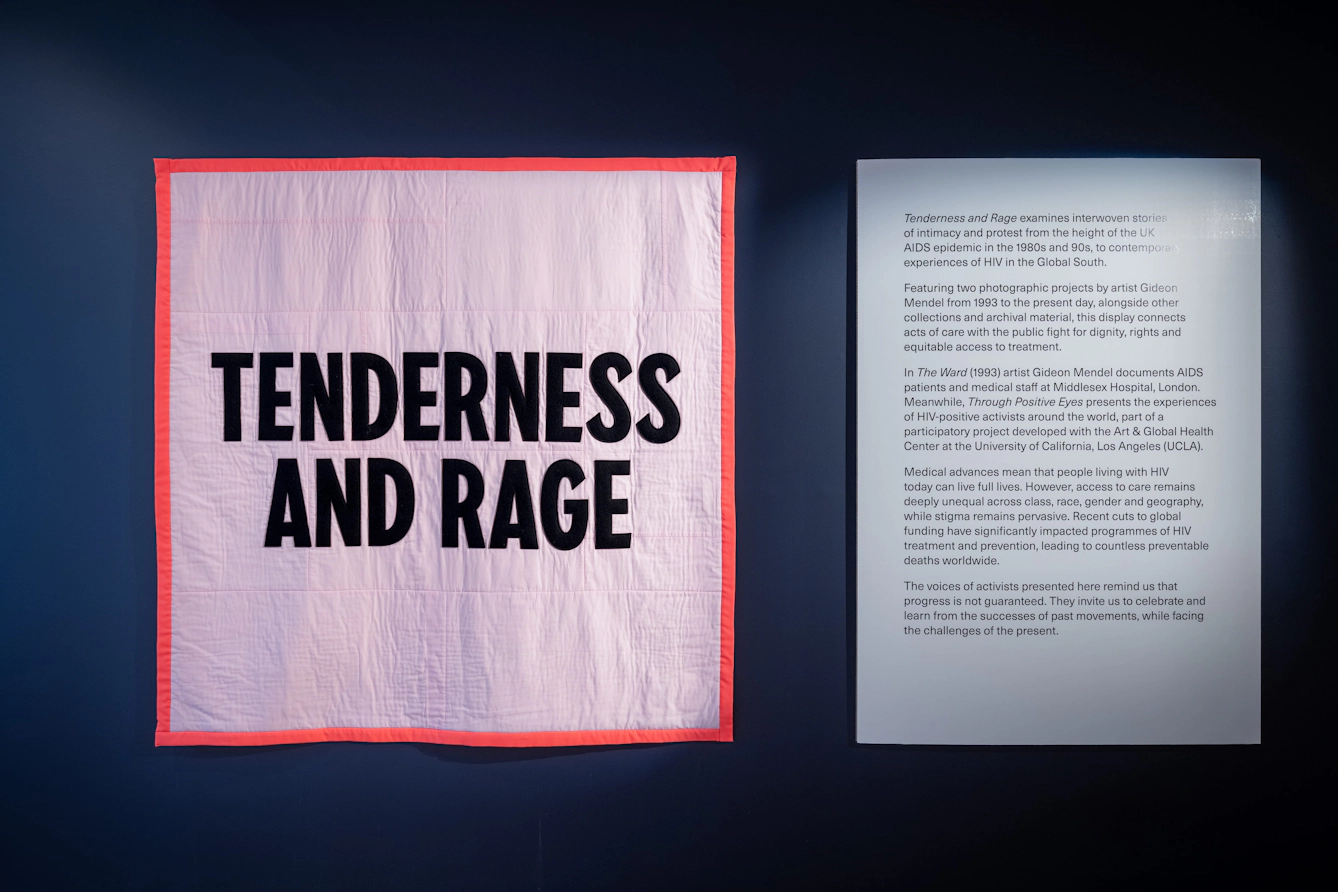
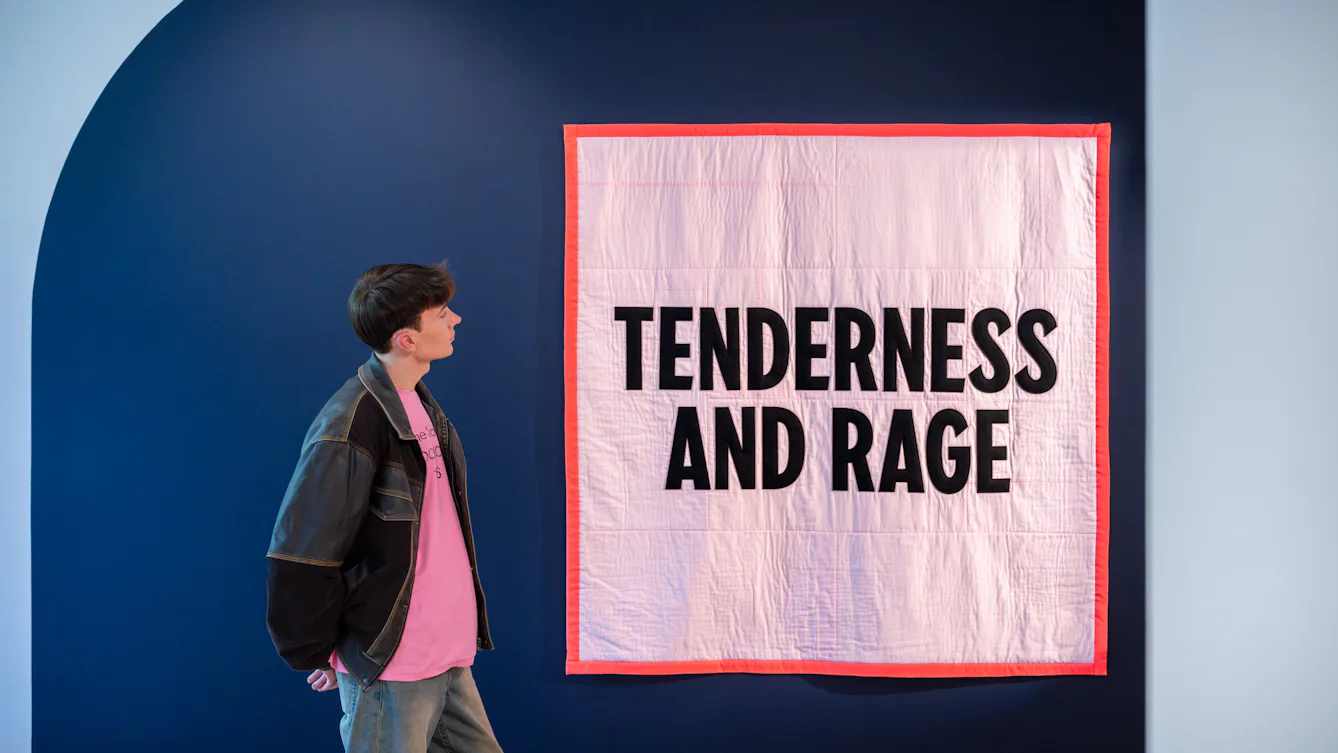
‘Tenderness and Rage’ exhibition at Wellcome Collection. Quilt by Martin McGrath Studio and Karina Thompson. Gallery Photo: Benjamin Gilbert. © Wellcome Collection. Attribution-NonCommercial 4.0 International (CC BY-NC 4.0).
This exhibition is called ‘Tenderness and Rage’.
An exhibition is a collection of things to look at and learn about.
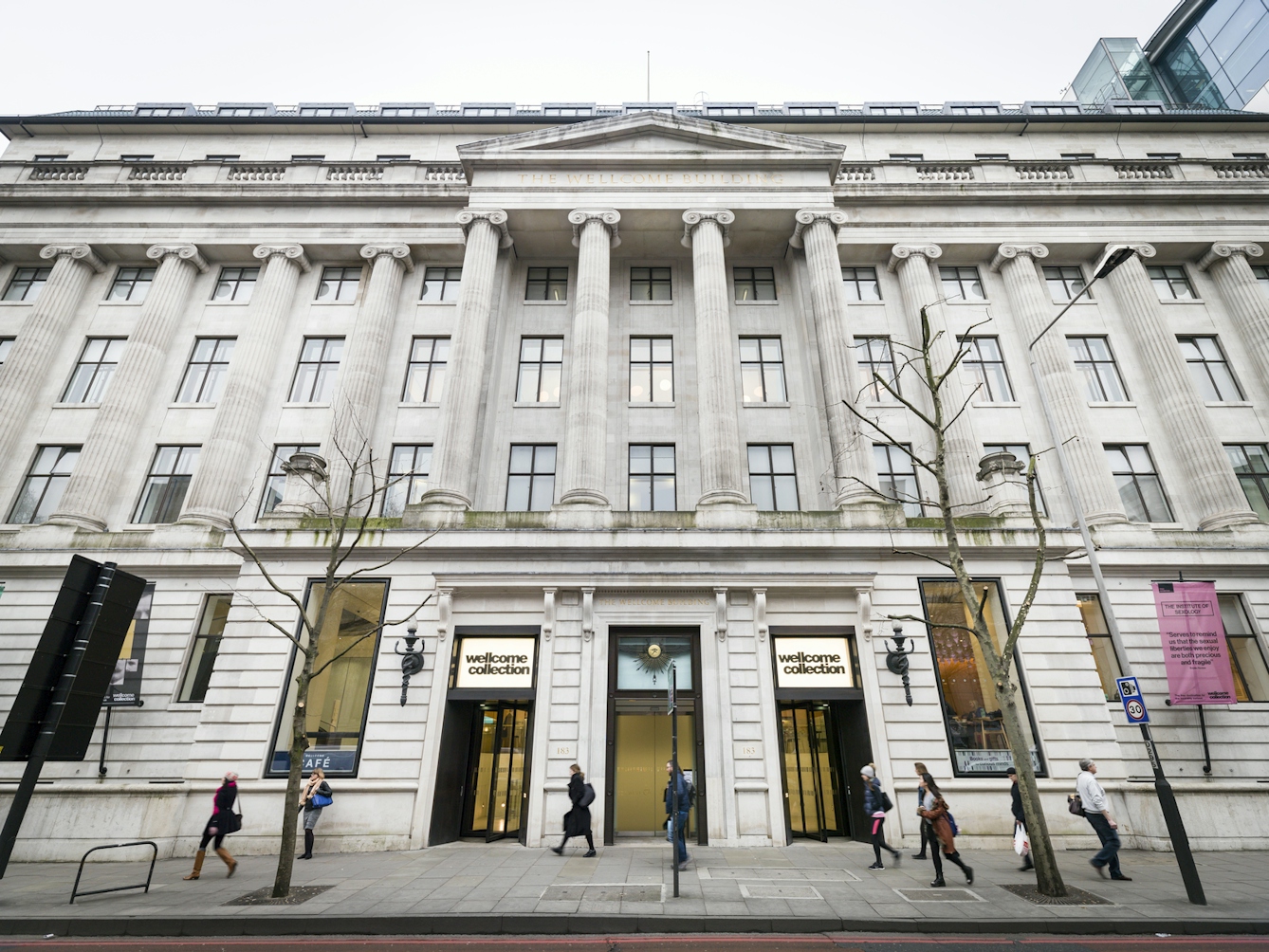
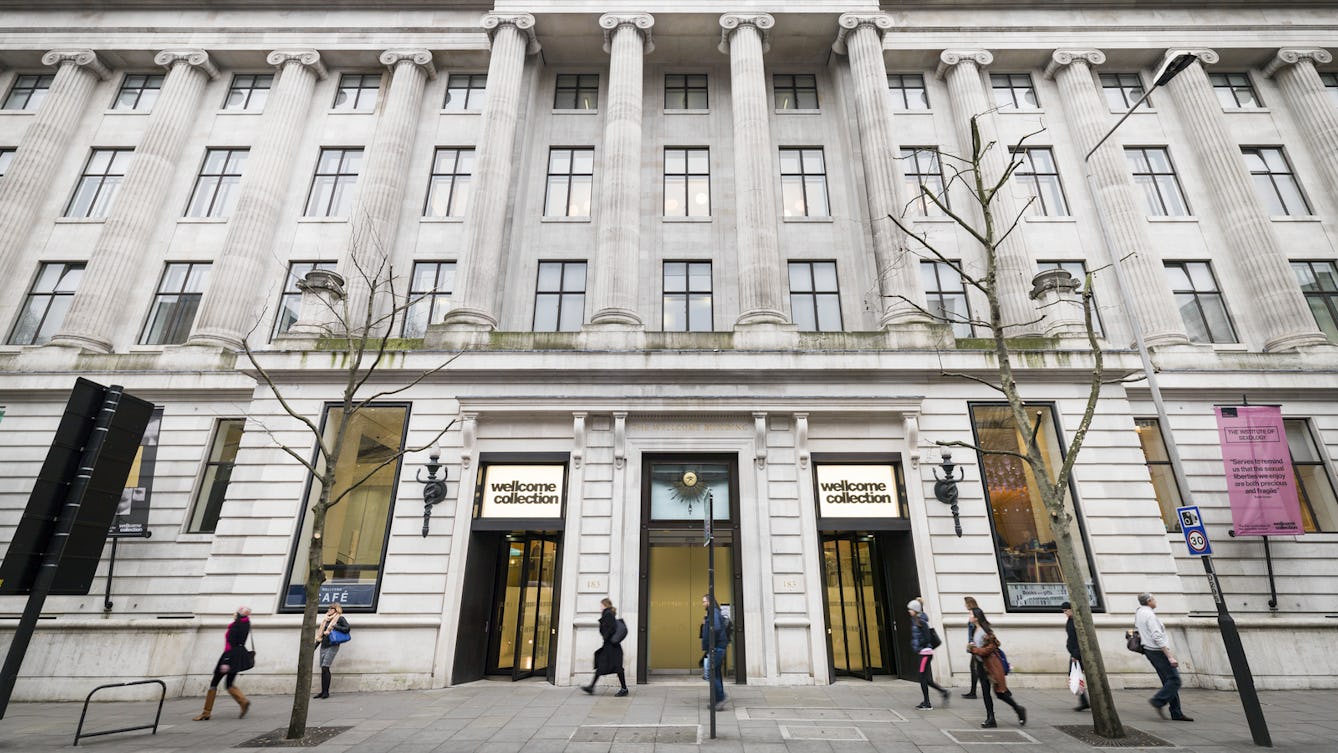
Wellcome Collection building. © Wellcome Collection. Attribution 4.0 International (CC BY 4.0).
The exhibition is at Wellcome Collection.
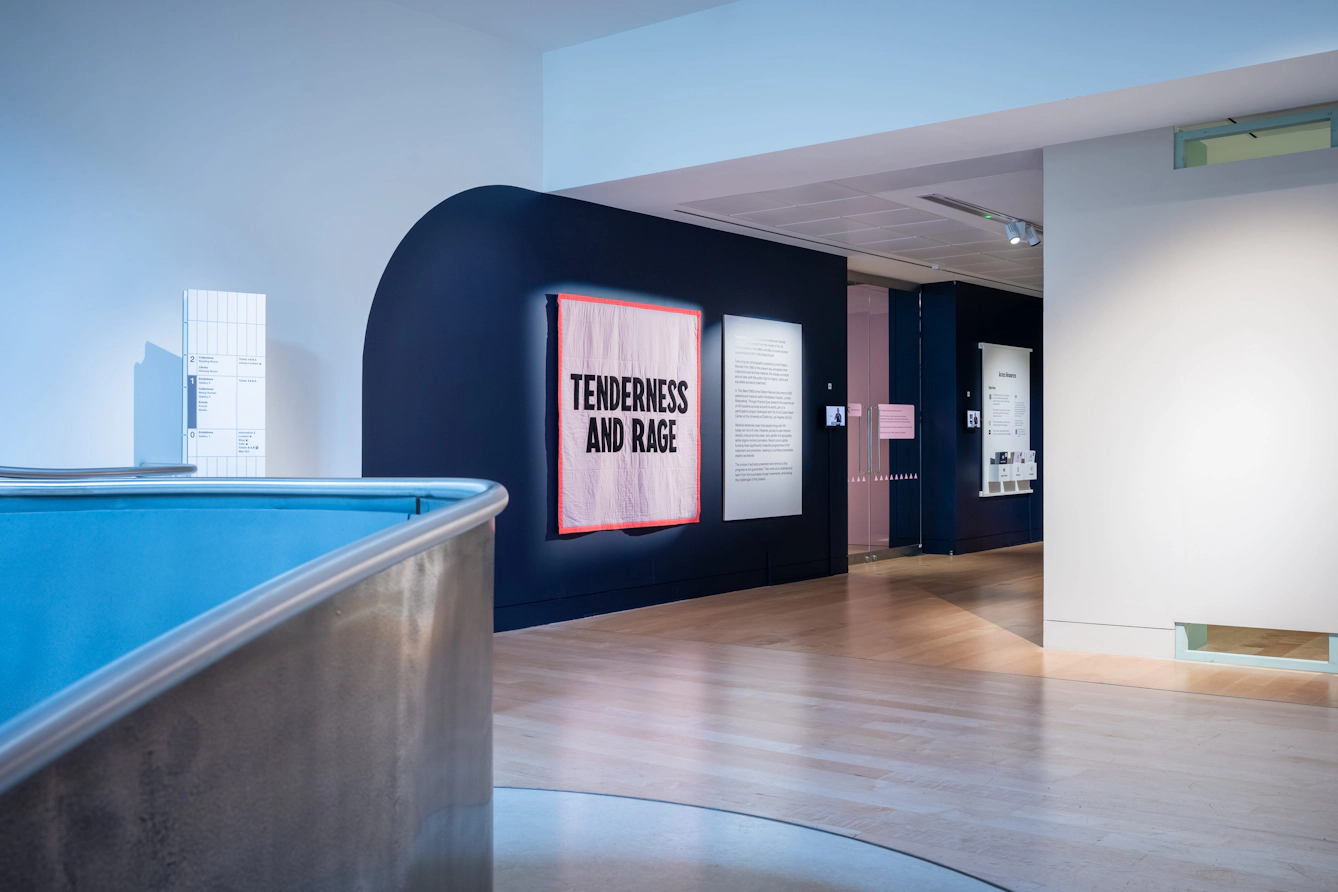
‘Tenderness and Rage’ exhibition at Wellcome Collection. Quilt by Martin McGrath Studio and Karina Thompson. Gallery Photo: Benjamin Gilbert. © Wellcome Collection. Attribution-NonCommercial 4.0 International (CC BY-NC 4.0).
The exhibition is in Gallery 3 on level 1 of our building.

The exhibition starts on Friday 29 May 2026.

The exhibition ends on Sunday 30 May 2027.

You do not have to pay to visit the exhibition.

You do not need to book a ticket.
You can just turn up.
Visiting Wellcome Collection
For more information about:
- opening times
- accessibility
- travel
click on this link: Visiting Wellcome Collection visual story.
About the exhibition
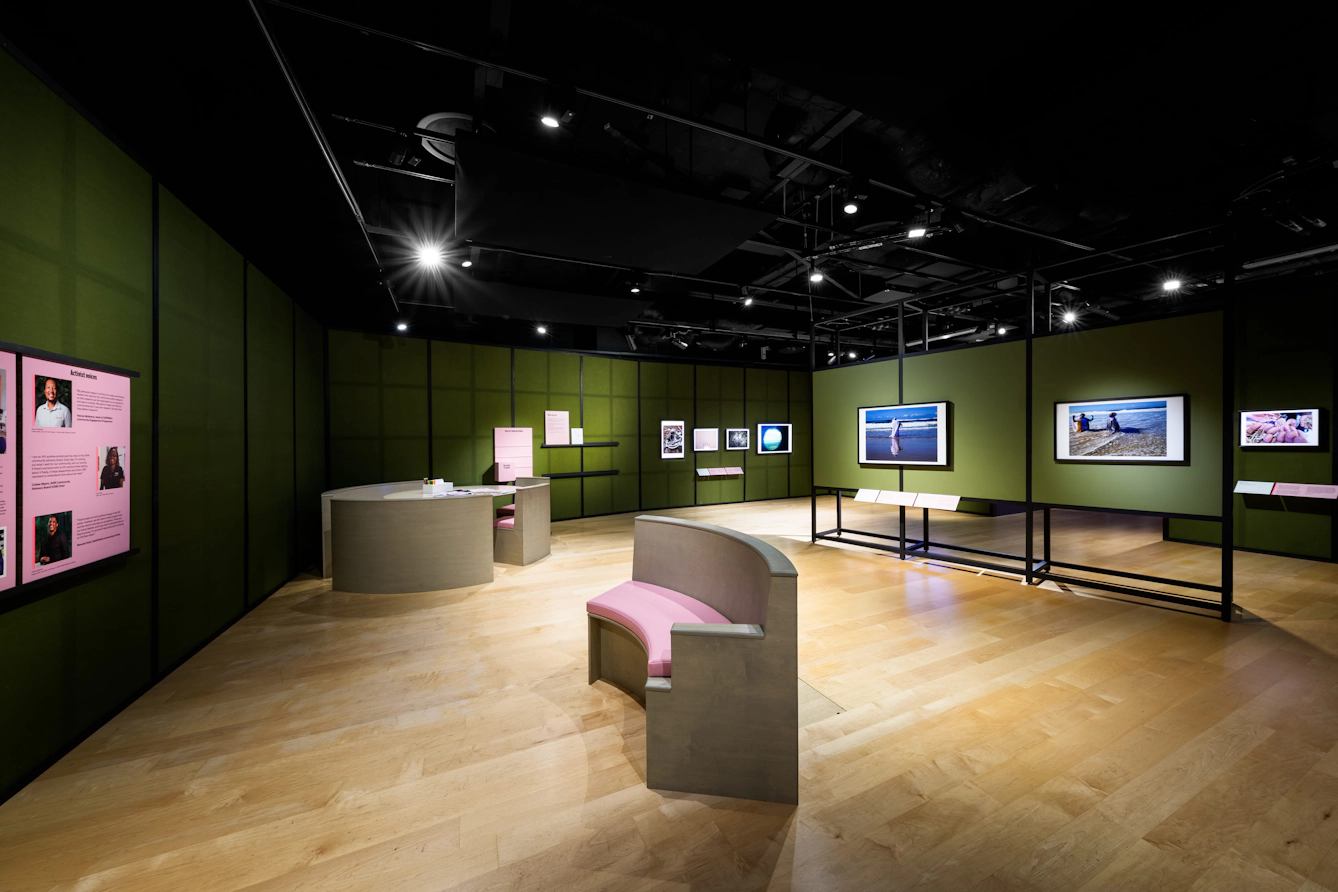
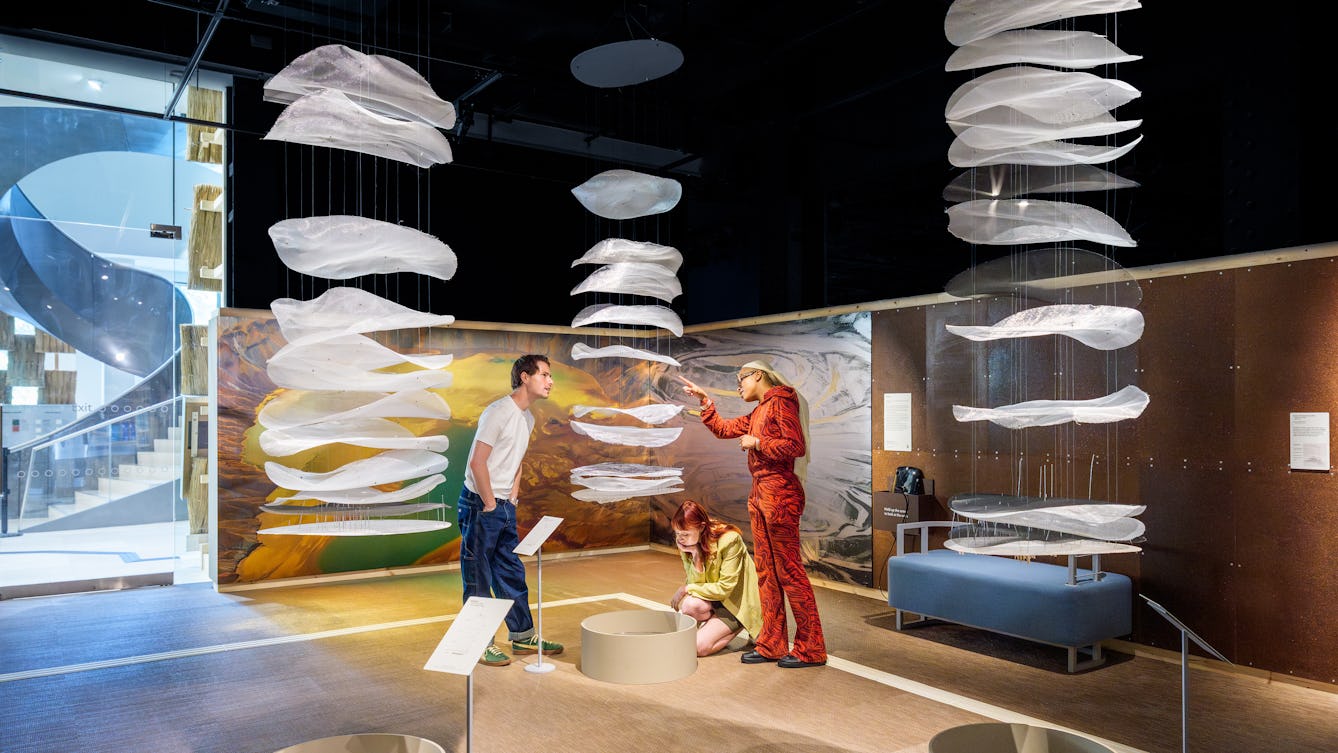
‘Tenderness and Rage’ exhibition at Wellcome Collection, Gallery Photo: Benjamin Gilbert. © Wellcome Collection. Attribution-NonCommercial 4.0 International (CC BY-NC 4.0).
‘Tenderness and Rage’ is an exhibition about HIV, protest and care.
HIV is a medical condition.
Protest is a way for people to come together to show they are unhappy about something. People who are protesting want others to listen to them and make changes.
Care is when you look after people.
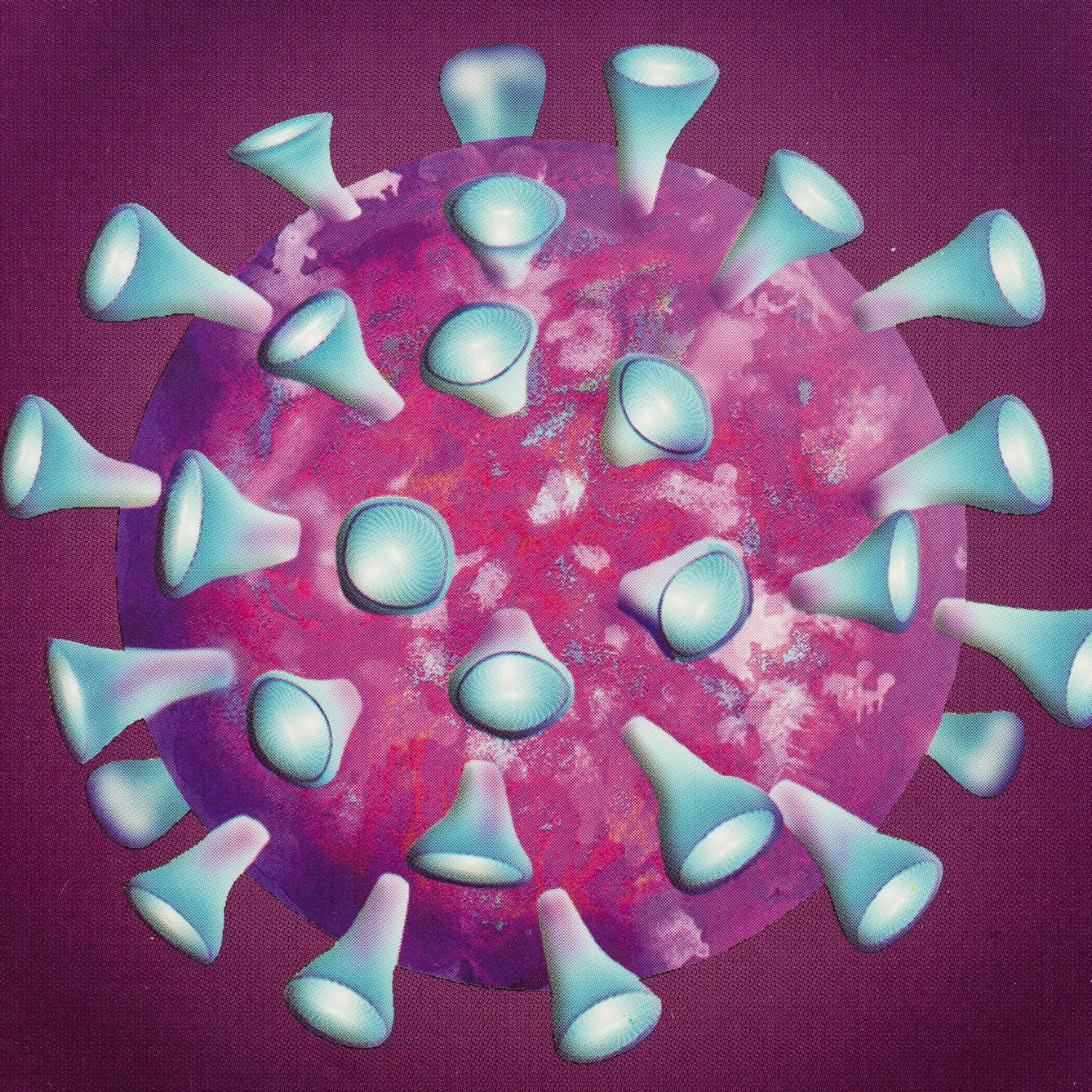
HIV, the Human Immunodeficiency Virus, is a virus which can cause AIDS. Source: Wellcome Collection. © Camden & Islington Gay Men's Team; illustration by Mark Blann.
What HIV is
HIV stands for human immunodeficiency virus.
A virus is a tiny germ that can make people sick.
The HIV virus can be treated with medicine.
If HIV is not treated with medicine it can weaken the body’s immune system.
The immune system is how your body protects you from illnesses.
If a person has HIV and is not given medicine, they could get very sick from other illnesses. Sometimes the person could die.
When this happens, we sometimes say the person has AIDS. AIDS stands for acquired immune deficiency syndrome.
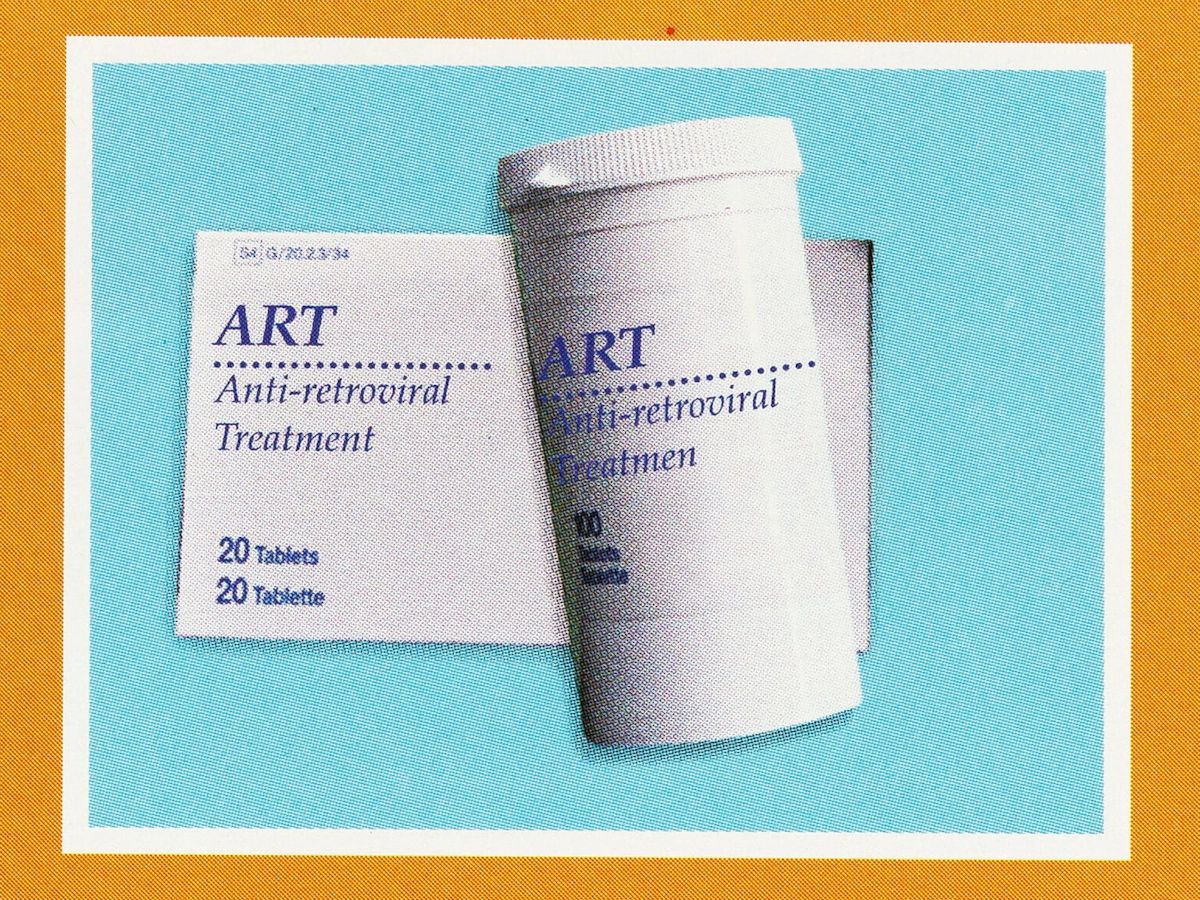
Medicines for HIV
People with HIV can take medicines to stop them getting sick. The medicines are called ART.
This is a short way of saying antiretroviral therapies – medicine that stops the virus being active in the person’s body and harming them.

When people take this medicine they also cannot give the virus to other people.
We call this U = U.
This stands for Undetectable = Untransmittable.
Undetectable means the virus is not active in the person’s body.
Untransmittable means the person cannot pass the virus to other people.
What is in the exhibition
In this exhibition, you can find out more about:
- the lives of people with HIV in the UK and around the world
- the ways people care for others with HIV
- the ways some people protest about HIV care.
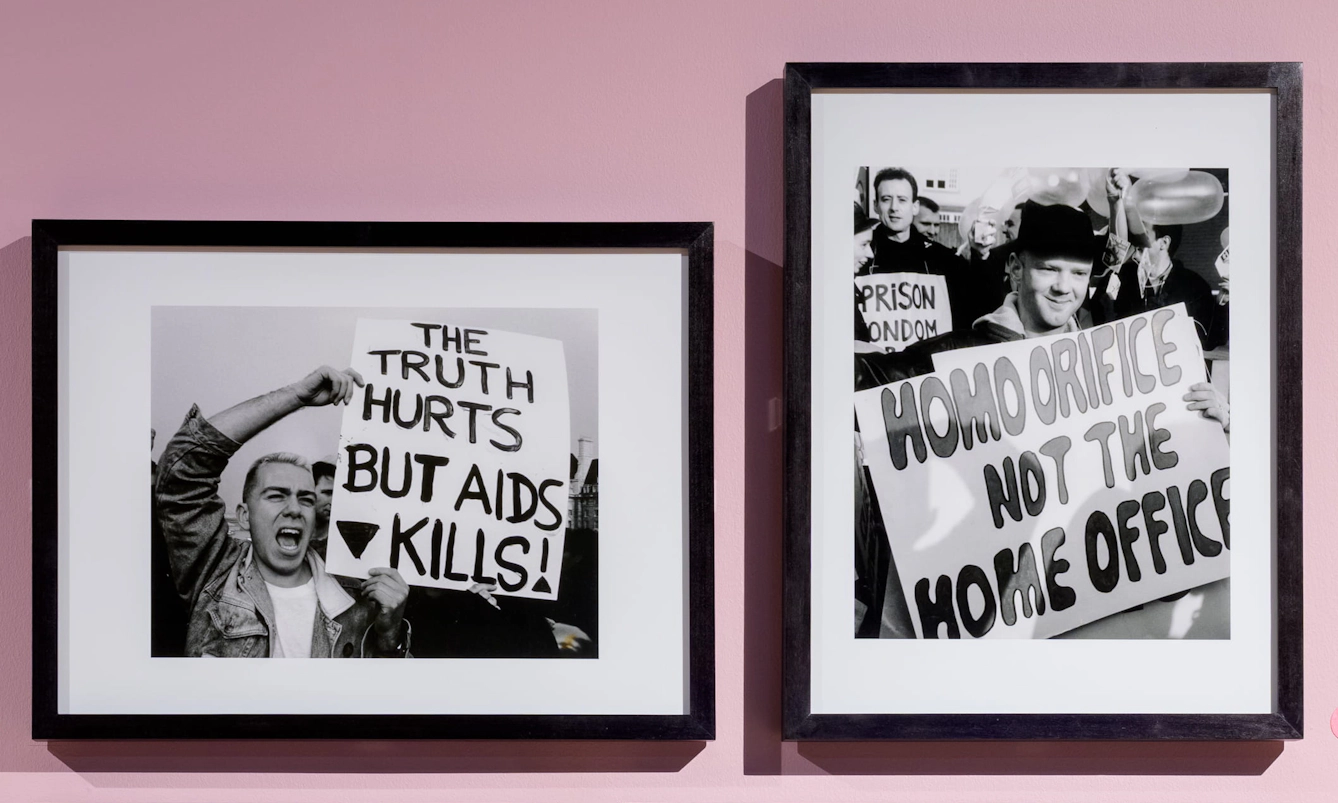
ACT UP London protests. Black and white photographs: © Gordon Rainsford Archive, Bishopsgate Institute. ‘Tenderness and Rage’ exhibition at Wellcome Collection. Gallery Photo: Benjamin Gilbert. © Wellcome Collection. Attribution-NonCommercial 4.0 International (CC BY-NC 4.0).
There are different things to look at and listen to in the exhibition.
These include:
- photographs
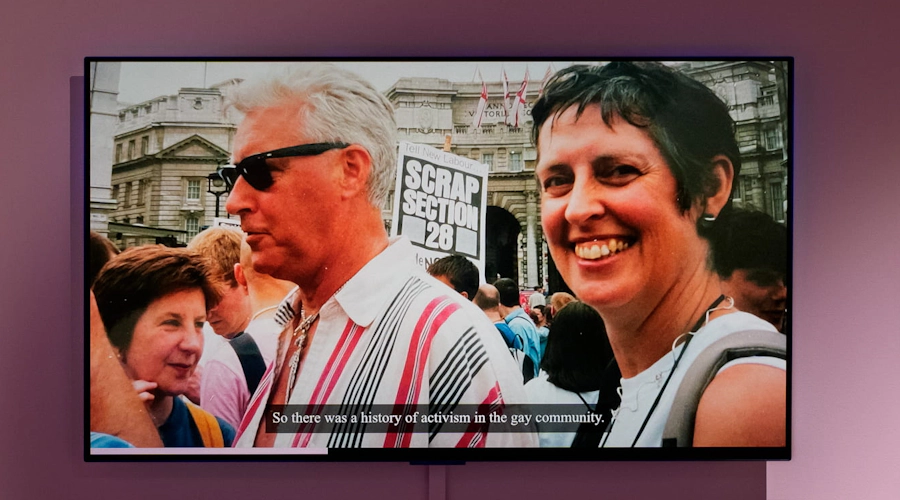
Dancing Whilst Diagnosed. Directed and edited by David Mark Graham. Courtesy of Lambeth Links, supported by Untold Stories, part of the Mayor of London's Commission on Diversity in the Public Realm. ‘Tenderness and Rage’ exhibition at Wellcome Collection. Gallery Photo: Benjamin Gilbert. © Wellcome Collection. Attribution-NonCommercial 4.0 International (CC BY-NC 4.0).
- films
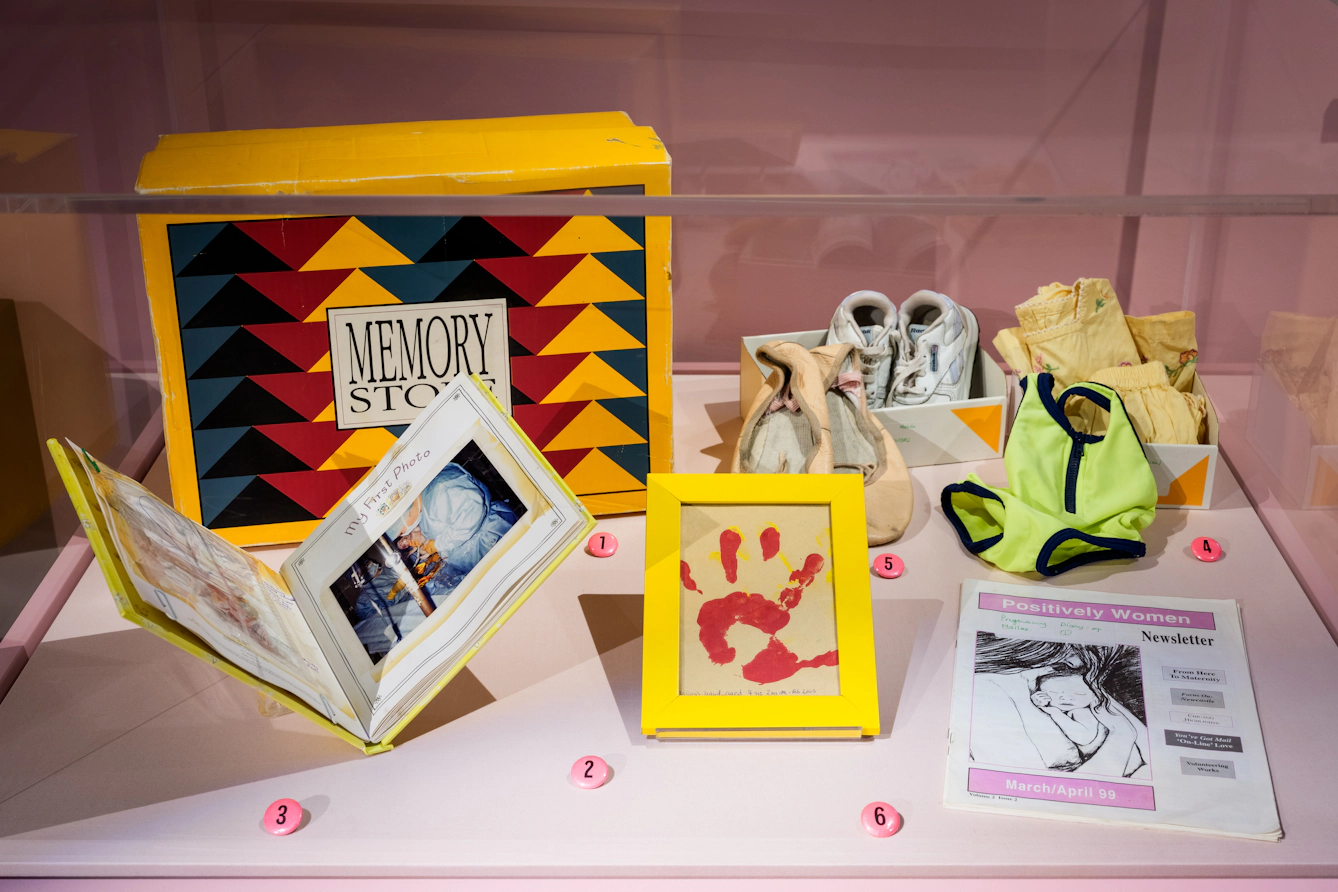
Tenderness and Rage. Memory Store, Angelina Namiba. Courtesy of Angelina Namiba. Gallery Photo: Benjamin Gilbert. © Wellcome Collection. Attribution-NonCommercial 4.0 International (CC BY-NC 4.0).
- historical items and documents
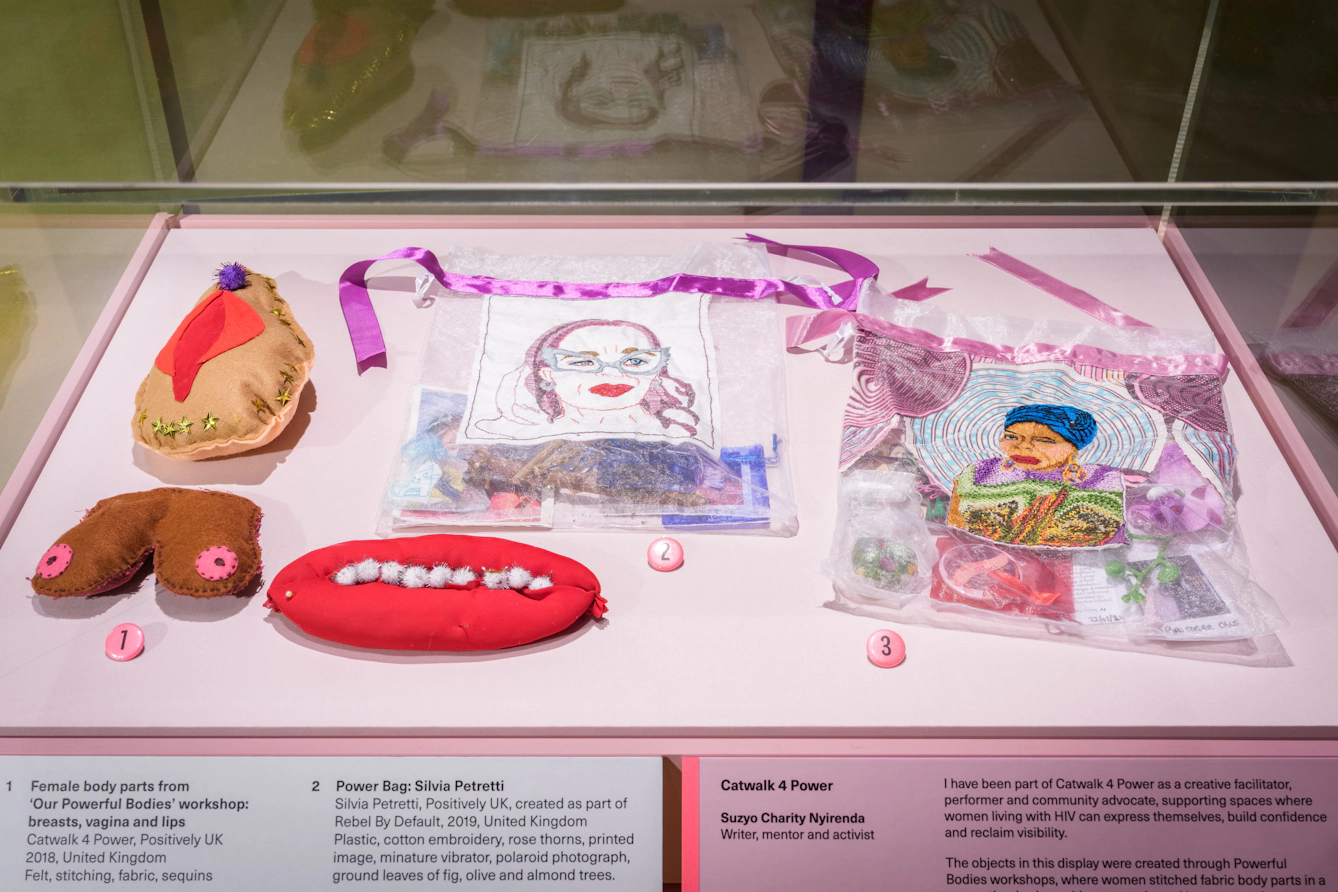
Female body parts and Power Bags. Courtesy of Positively UK. ‘Tenderness and Rage’ exhibition at Wellcome Collection. Gallery Photo: Benjamin Gilbert. © Wellcome Collection. Attribution-NonCommercial 4.0 International (CC BY-NC 4.0).
- artworks.

‘Tenderness and Rage’ exhibition at Wellcome Collection, Gallery Photo: Benjamin Gilbert. © Wellcome Collection. Attribution-NonCommercial 4.0 International (CC BY-NC 4.0).
There are seats in the exhibition.
You can sit anywhere you feel comfortable.
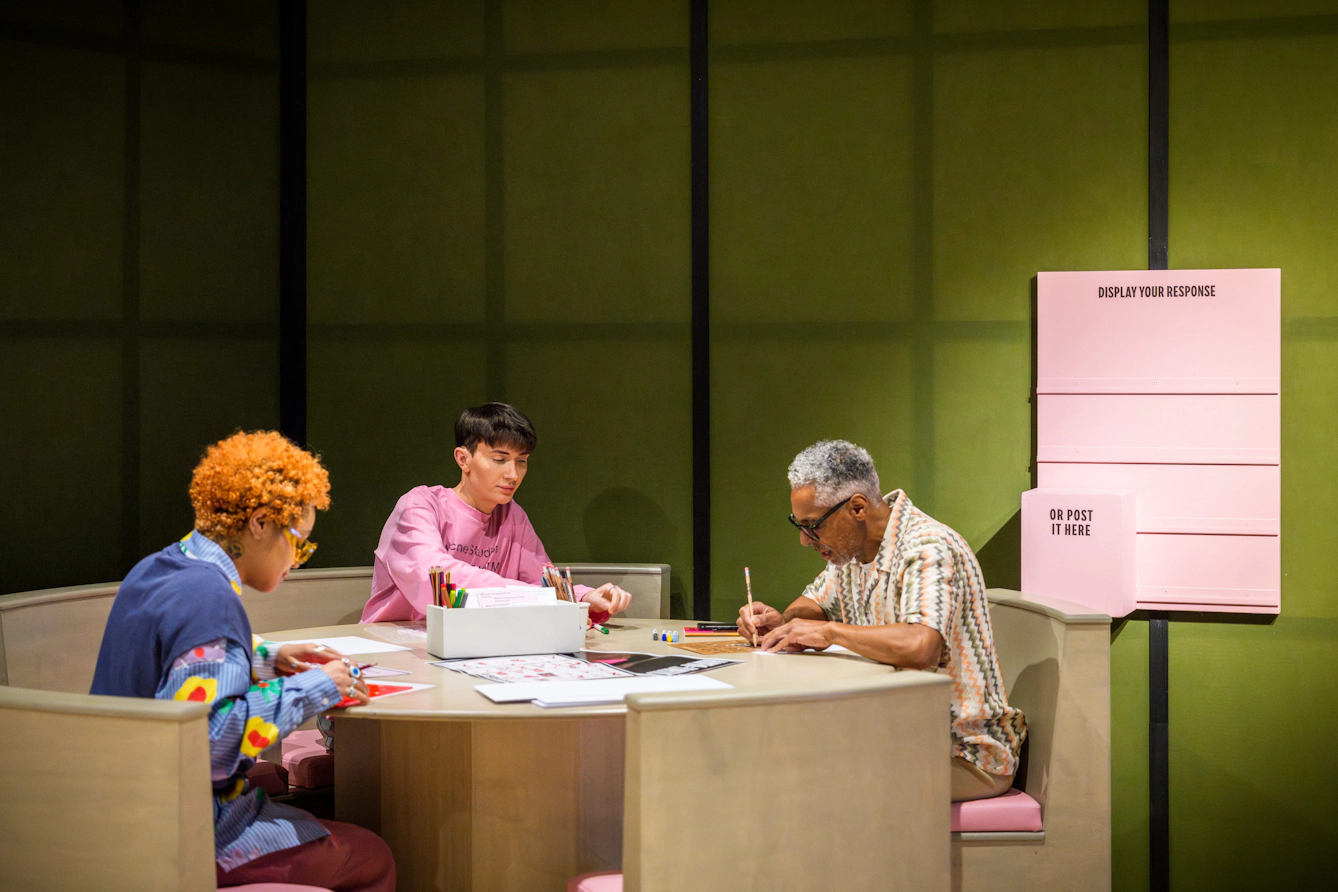
Placard making activity. ‘Tenderness and Rage’ exhibition at Wellcome Collection, Gallery Photo: Benjamin Gilbert. © Wellcome Collection. Attribution-NonCommercial 4.0 International (CC BY-NC 4.0).
There is an activity area in room 2.
In this area you can write or draw.

This exhibition includes lived experience of HIV.
Lived experience is when people share what happened to them and how they felt.
Some of the things in this exhibition talk about:
- Death and bereavement. Bereavement is when someone you care about dies.
- Discrimination. This means treating someone unfairly because of who they are.
- Homophobia. This means: (1) Treating gay and queer people unfairly and (2) The idea that gay and queer people are dangerous or unwanted.
- Illness. This is when someone get sick.
- Racism. This means treating someone unfairly because of their race.
- Stigma. This is when people are rejected by others. This can be because: (1) you are scared because they are different, (2) you think the way they live is wrong or dangerous, or (3) you do not understand them.
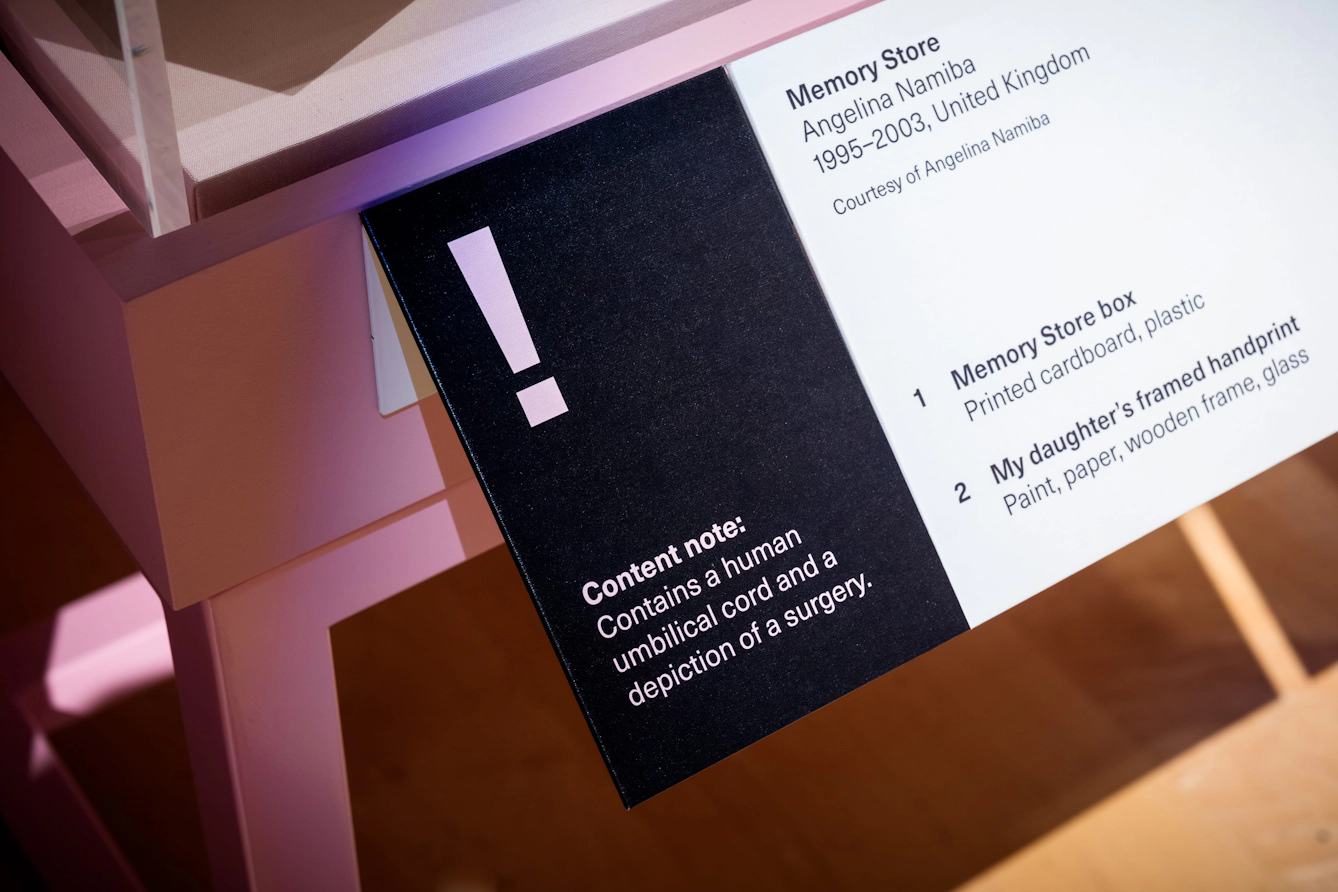
‘Tenderness and Rage’ exhibition at Wellcome Collection, Gallery Photo: Benjamin Gilbert. © Wellcome Collection. Attribution-NonCommercial 4.0 International (CC BY-NC 4.0).
There is an artwork called ‘Memory Store’ that has:
- A human umbilical cord. This is part of the human body that attaches a baby to its mother.
- A picture of a surgery.
The label next to this artwork tells you that these things are there.
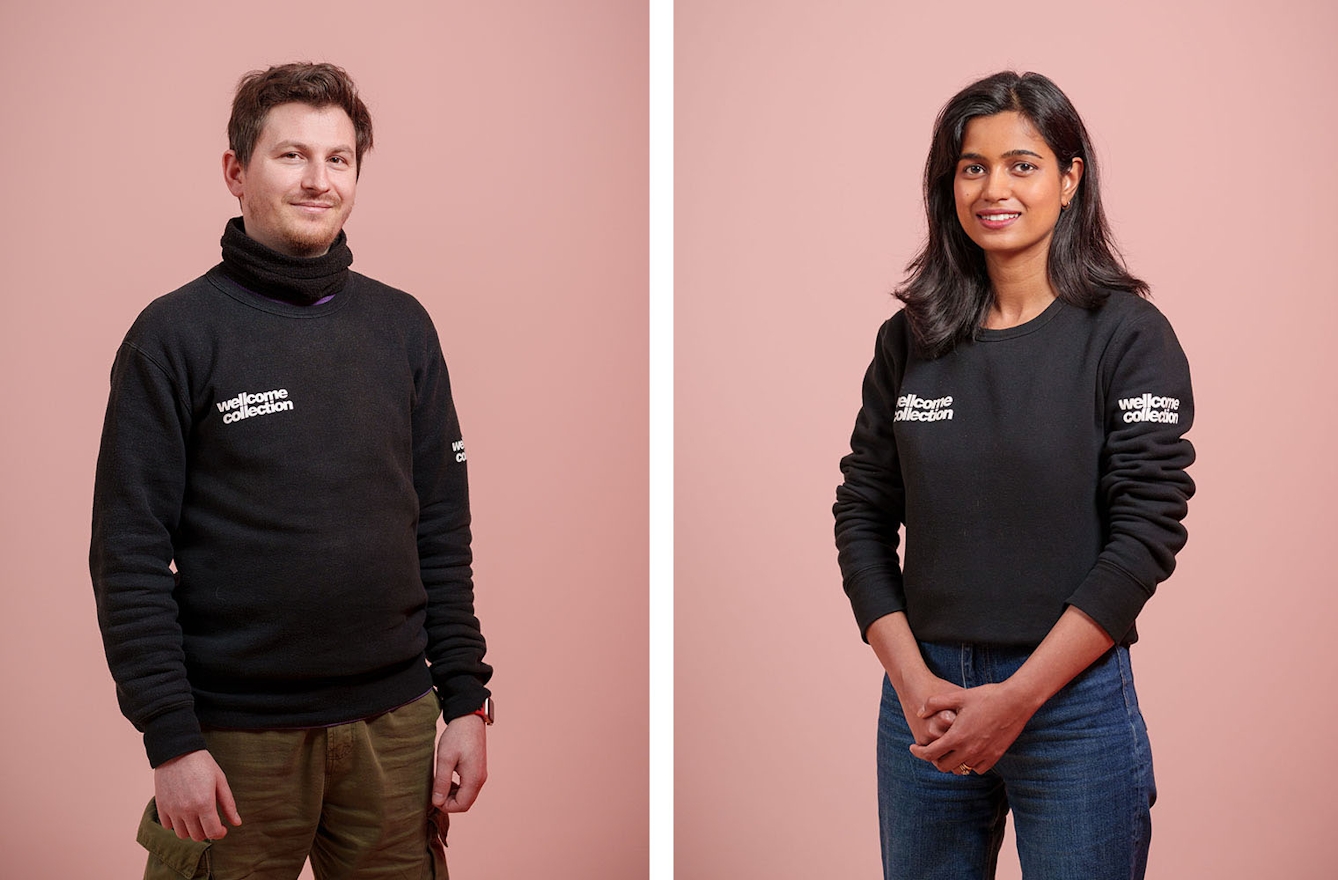
Visitor Experience Assistants. © Wellcome Collection. Attribution-NonCommercial 4.0 International (CC BY-NC 4.0).
If you need help with anything, you can ask a member of staff.
Sensory information

You cannot eat or drink in the exhibition.

You can breastfeed or bottle-feed babies.
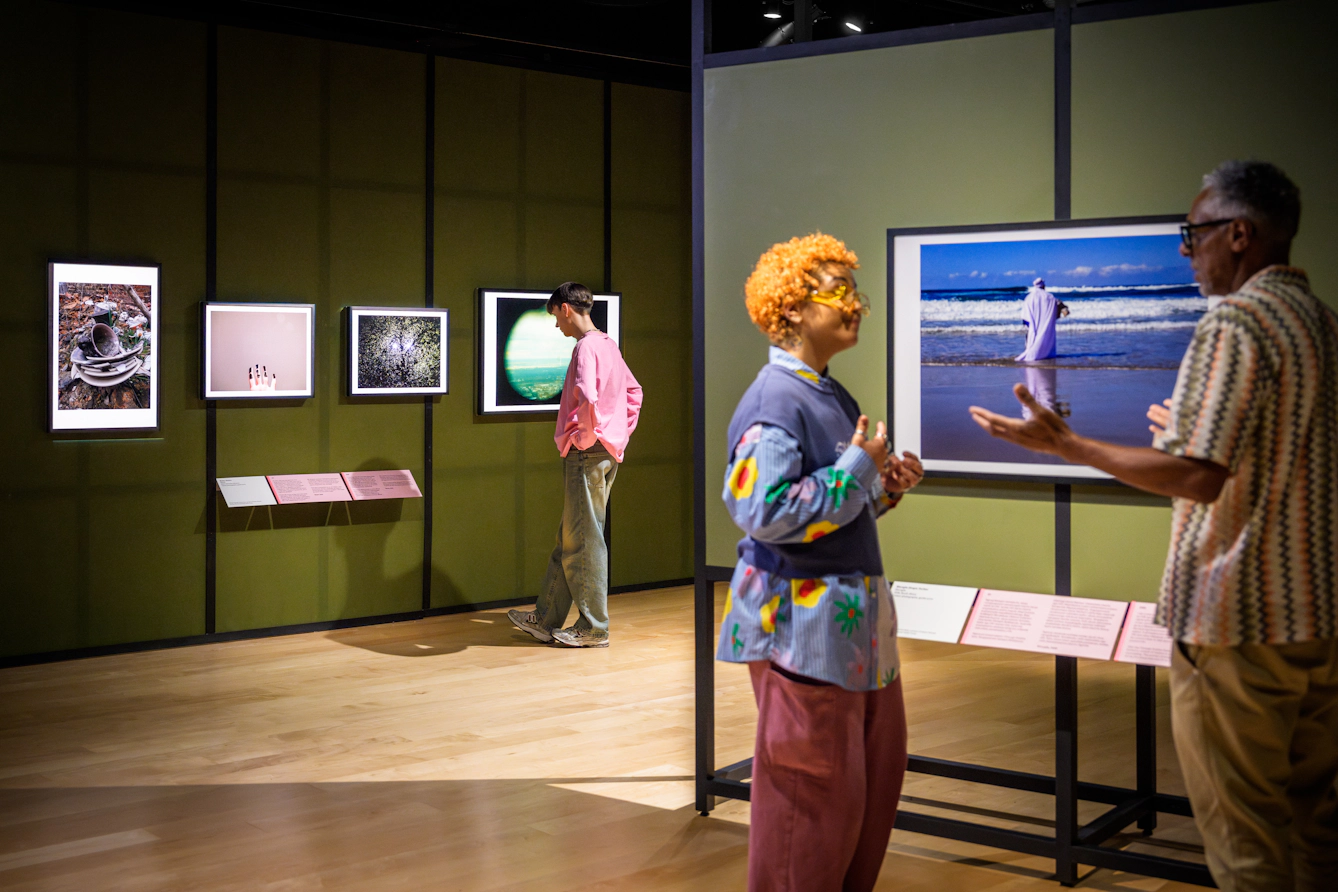
Tenderness and Rage. Through Positive Eyes. © Through Positive Eyes, a project of Gideon Mendel and the UCLA Art and Global Health Center. Gallery Photo: Benjamin Gilbert. © Wellcome Collection. Attribution-NonCommercial 4.0 International (CC BY-NC 4.0).
You can speak or chat in this space.

There are videos and sound playing through headphones.
What is in room 1
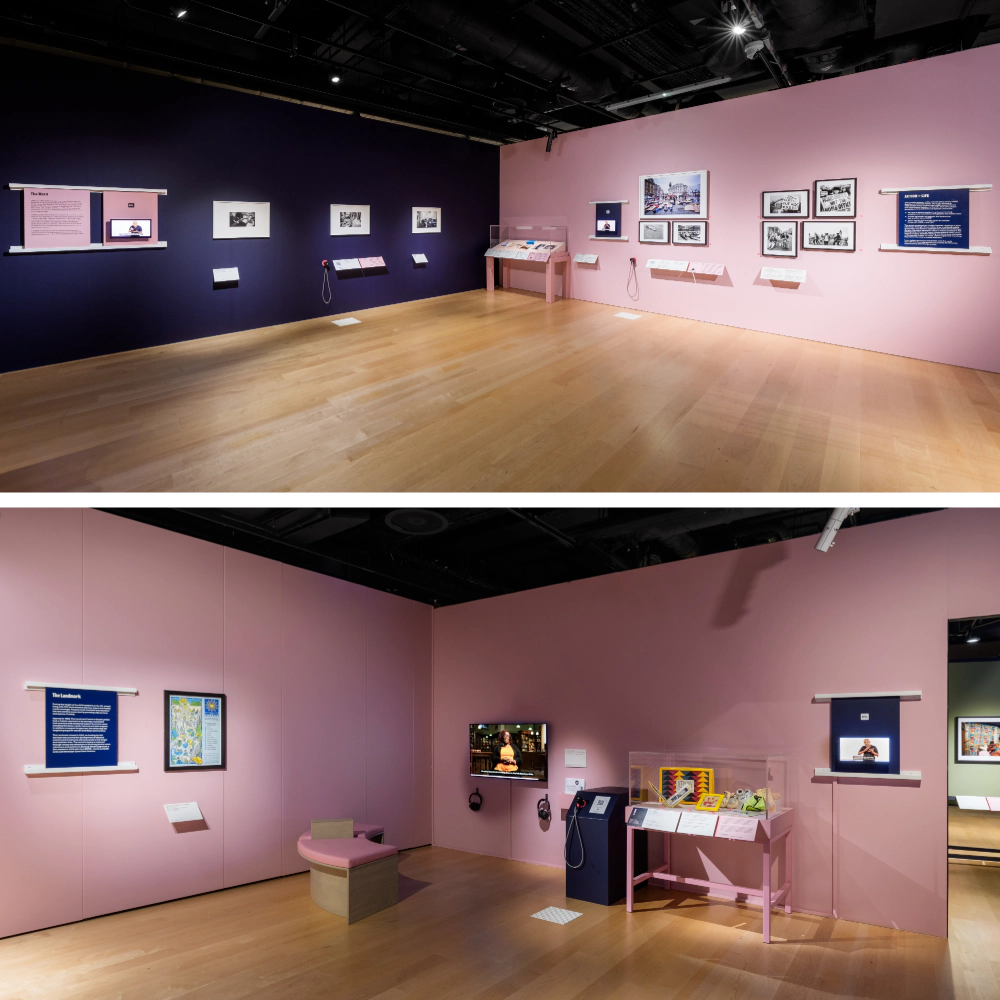
‘Tenderness and Rage’ exhibition at Wellcome Collection, Gallery Photo: Benjamin Gilbert. © Wellcome Collection. Attribution-NonCommercial 4.0 International (CC BY-NC 4.0).
Room 1 of the exhibition is about the history of HIV, activism and care in London in the 1980s and 1990s.
Activism is when people try to make change in the way people live and think. People who take part in activism are called activists.
At this time, people did not understand the HIV virus well and there was no effective medicine to treat people. This meant that many people got sick and died from the virus.
Anyone can get HIV. But some groups of people were affected more than others by the illness. These included:
- LGBTQIA+ people
- migrants
- drug users
- Black people.
People with HIV were stigmatised and discriminated against. This meant they were rejected and feared by other people.
Activists felt that the government was not doing enough to help. The activists worked to make things better for people living with HIV.
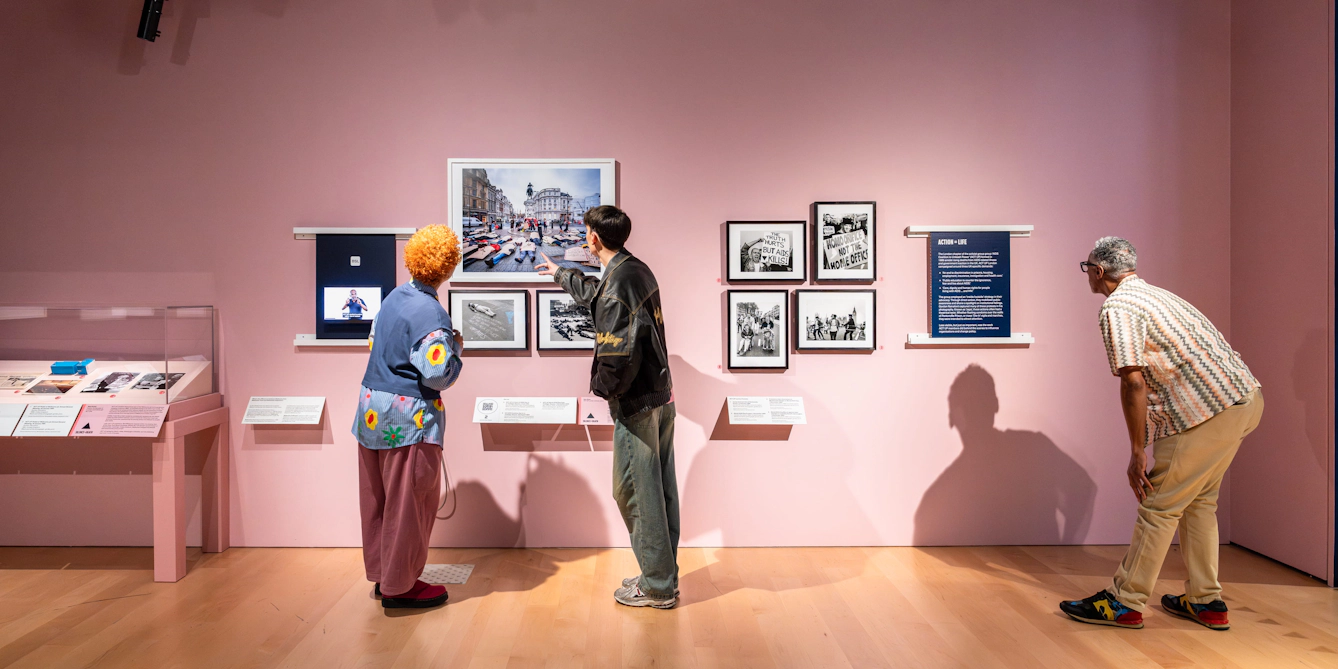
ACT UP London protests. Black and white photographs: © Gordon Rainsford Archive, Bishopsgate Institute. ‘Tenderness and Rage’ exhibition at Wellcome Collection. Gallery Photo: Benjamin Gilbert. © Wellcome Collection. Attribution-NonCommercial 4.0 International (CC BY-NC 4.0).
ACTION = LIFE
ACT UP London was a group a of activists demanding:
- better healthcare and medicine
- the end of discrimination
- rights and dignity
for people living with HIV.
In this section there are 9 photos showing protests organised by ACT UP London.
At these protests, ACT UP activists wanted to:
- raise awareness of HIV
- make HIV medicines cheaper and easier to get
- make governments and organisations treat people with HIV better.
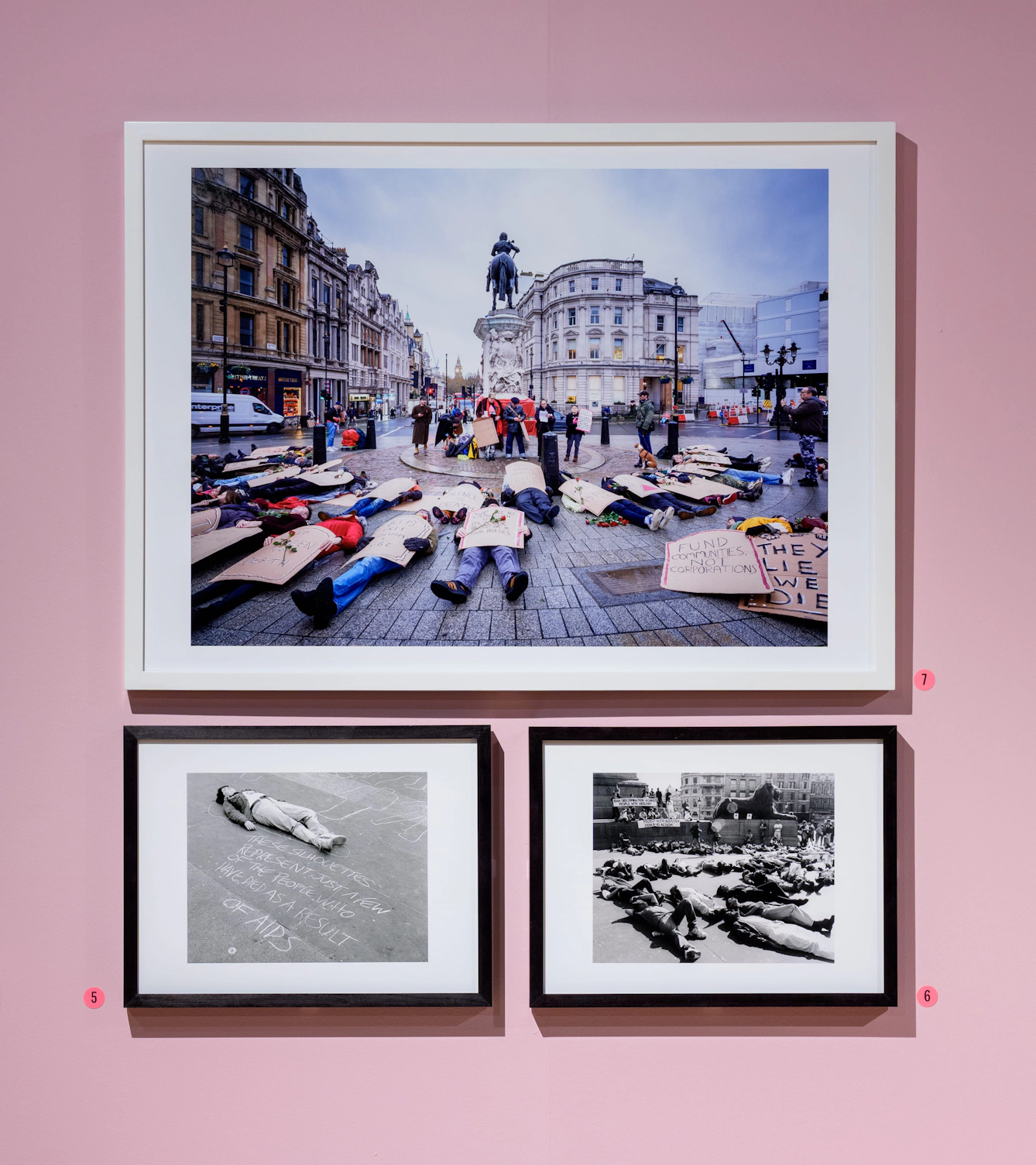
ACT UP London protests. Black and white photographs: © Gordon Rainsford Archive, Bishopsgate Institute. ‘Tenderness and Rage’ exhibition at Wellcome Collection. Gallery Photo: Benjamin Gilbert. © Wellcome Collection. Attribution-NonCommercial 4.0 International (CC BY-NC 4.0).
Die-ins
One type of protest that ACT UP organised is called a die-in.
In this protest, people lie on the ground to represent the people who have died from AIDS.
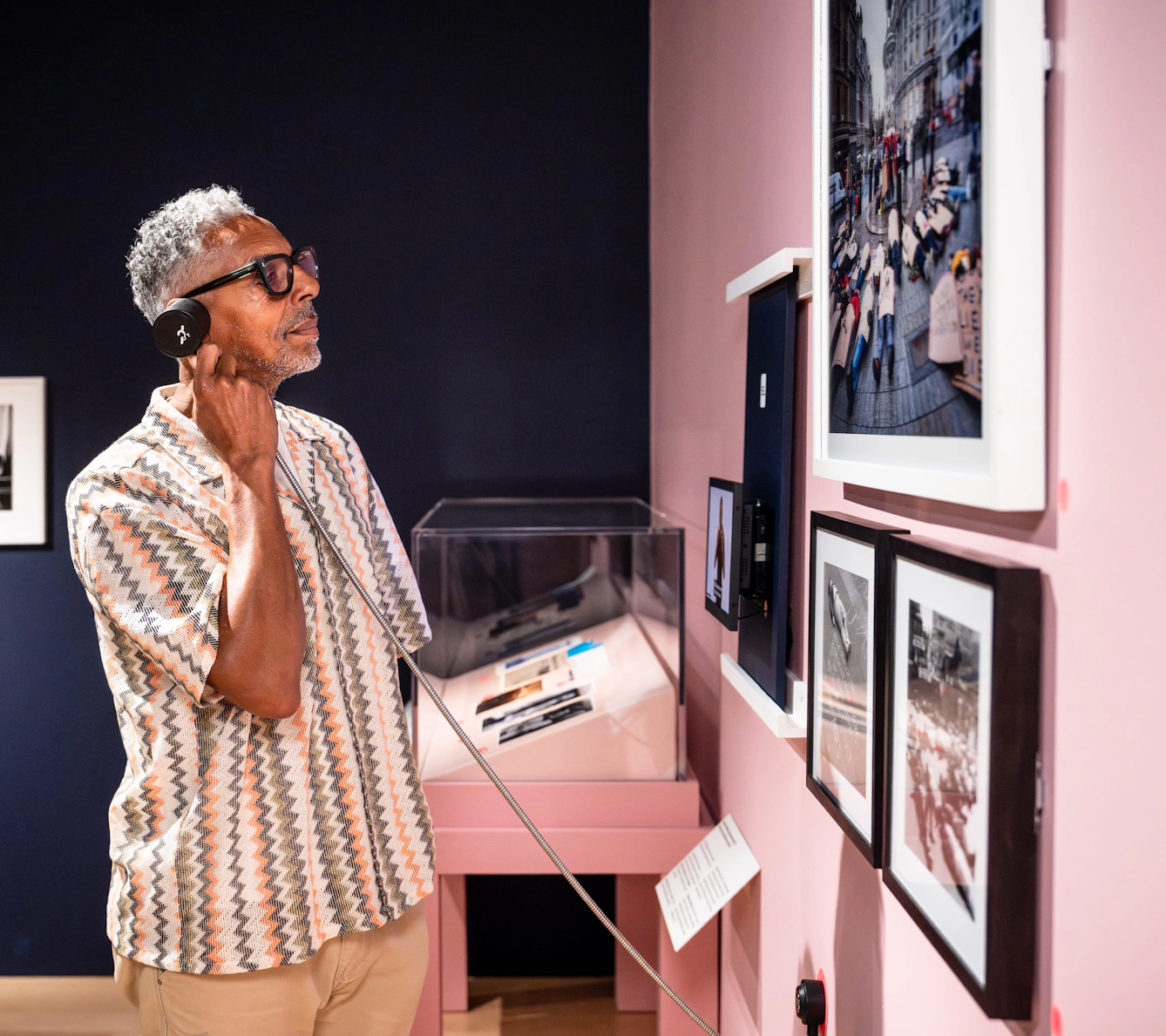
‘Tenderness and Rage’ exhibition at Wellcome Collection, Gallery Photo: Benjamin Gilbert. © Wellcome Collection. Attribution-NonCommercial 4.0 International (CC BY-NC 4.0).
There is a piece of audio with the voice of Dan Glass talking about why protest is important. Dan is an activist.
The audio is about 3 minutes long.


You can listen to the audio:
- on the earcone on the wall, or
- by scanning the QR code.
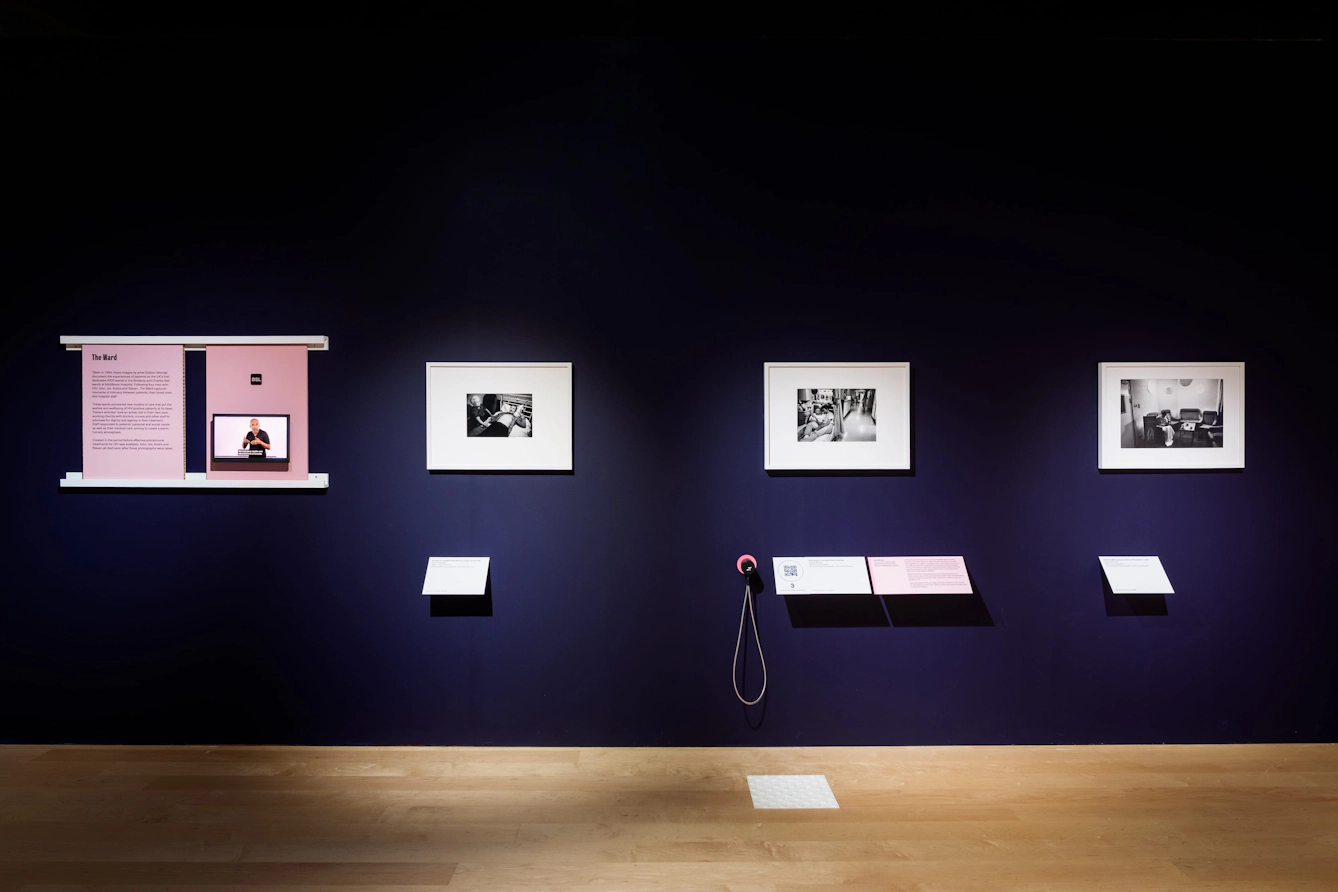
The Ward, 1993. © Gideon Mendel. ‘Tenderness and Rage’ exhibition at Wellcome Collection. Gallery Photo: Benjamin Gilbert. © Wellcome Collection. Attribution-NonCommercial 4.0 International (CC BY-NC 4.0).
‘The Ward’
There are 3 photographs by artist Gideon Mendel called ‘The Ward’. ‘The Ward’ shows patients with HIV in hospital in 1993.
A ward is a room or area in a hospital where patients stay while they are being treated.
A patient is a person who is unwell and getting medical treatment.
The hospital ward in these photos was special because the patients had agency about their treatment.
Agency means:
- being able to choose what you want to happen
- people respecting and supporting your choices.
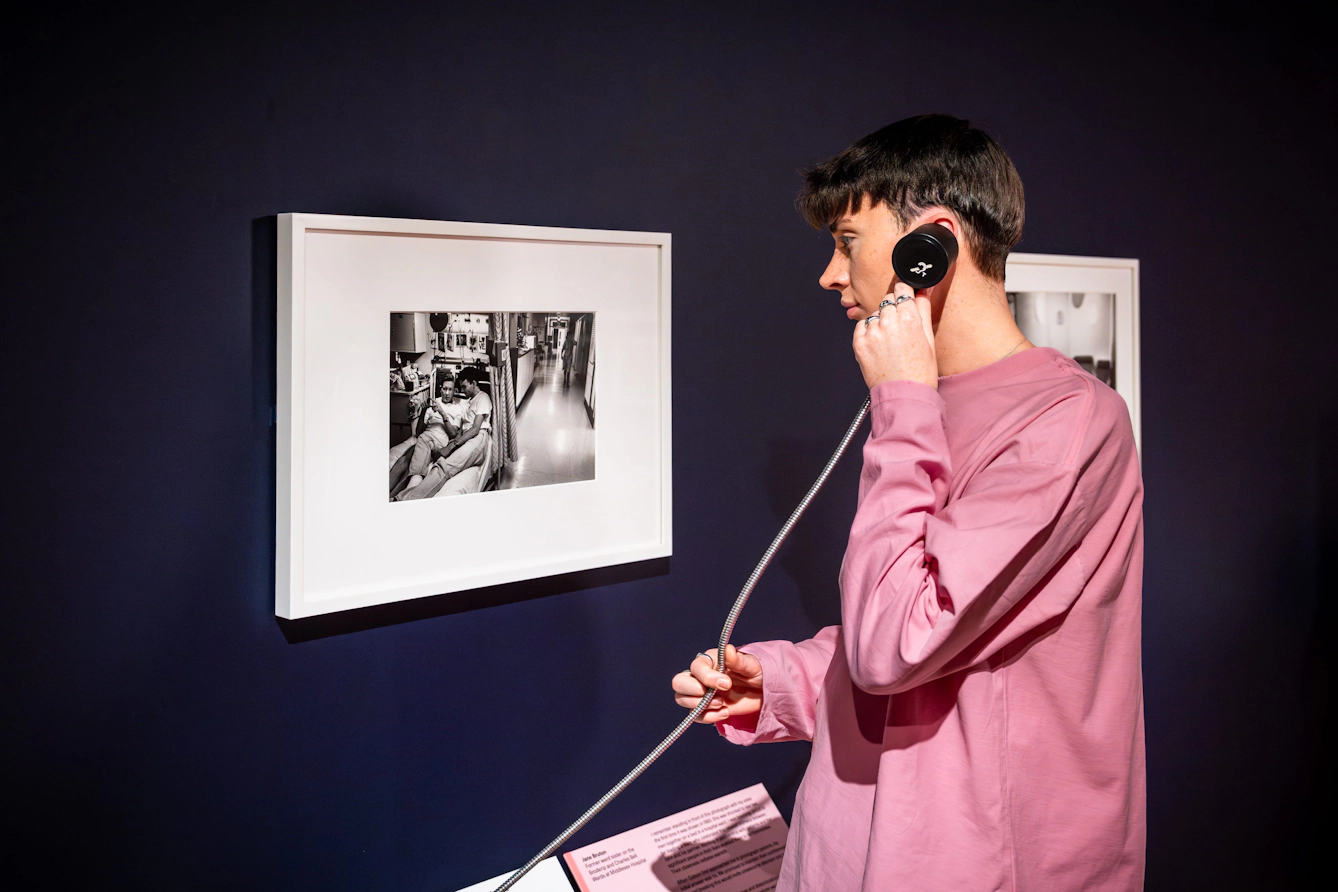
The Ward, 'John lying on a hospital bed, chatting'. 1993. © Gideon Mendel. ‘Tenderness and Rage’ exhibition at Wellcome Collection. Gallery Photo: Benjamin Gilbert. © Wellcome Collection. Attribution-NonCommercial 4.0 International (CC BY-NC 4.0).
Jane Bruton worked as a nurse on the ward where these photos were taken.
Jane worked with the patients in the photos.
You can listen to audio of Jane talking about what it was like to be a nurse during this time.
You can listen to the audio on the earcone on the wall, or by scanning the QR code.
The audio is around 4 minutes long.
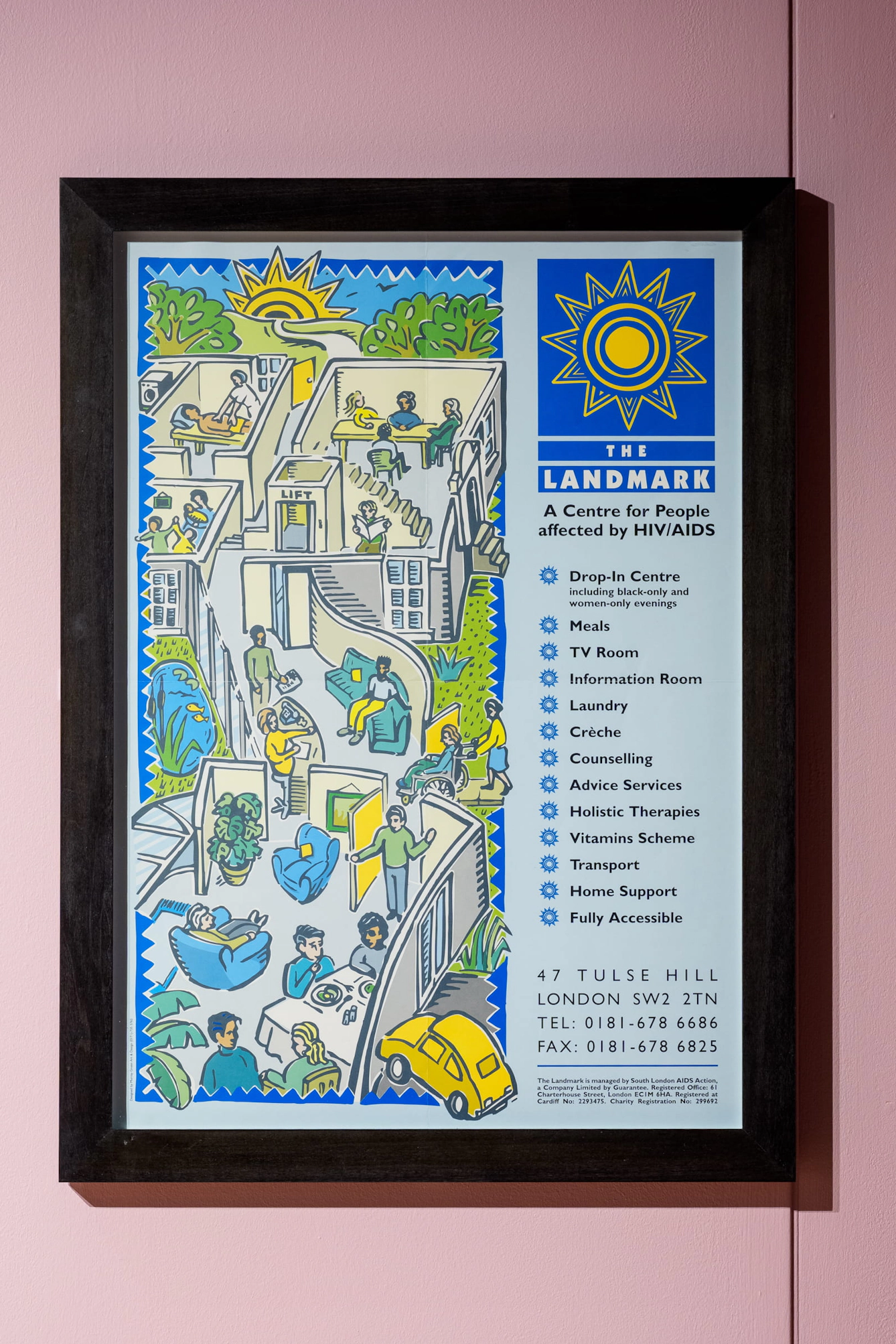
The Landmark
During the 1990s, places like The Landmark provided holistic care for people living with HIV.
Holistic care is looking after different types of needs at the same time. These needs might be medical, social or emotional.
The holistic care at The Landmark included:
- groups for people to meet and talk
- haircuts and laundry services
- counselling and therapies
- places to rest.
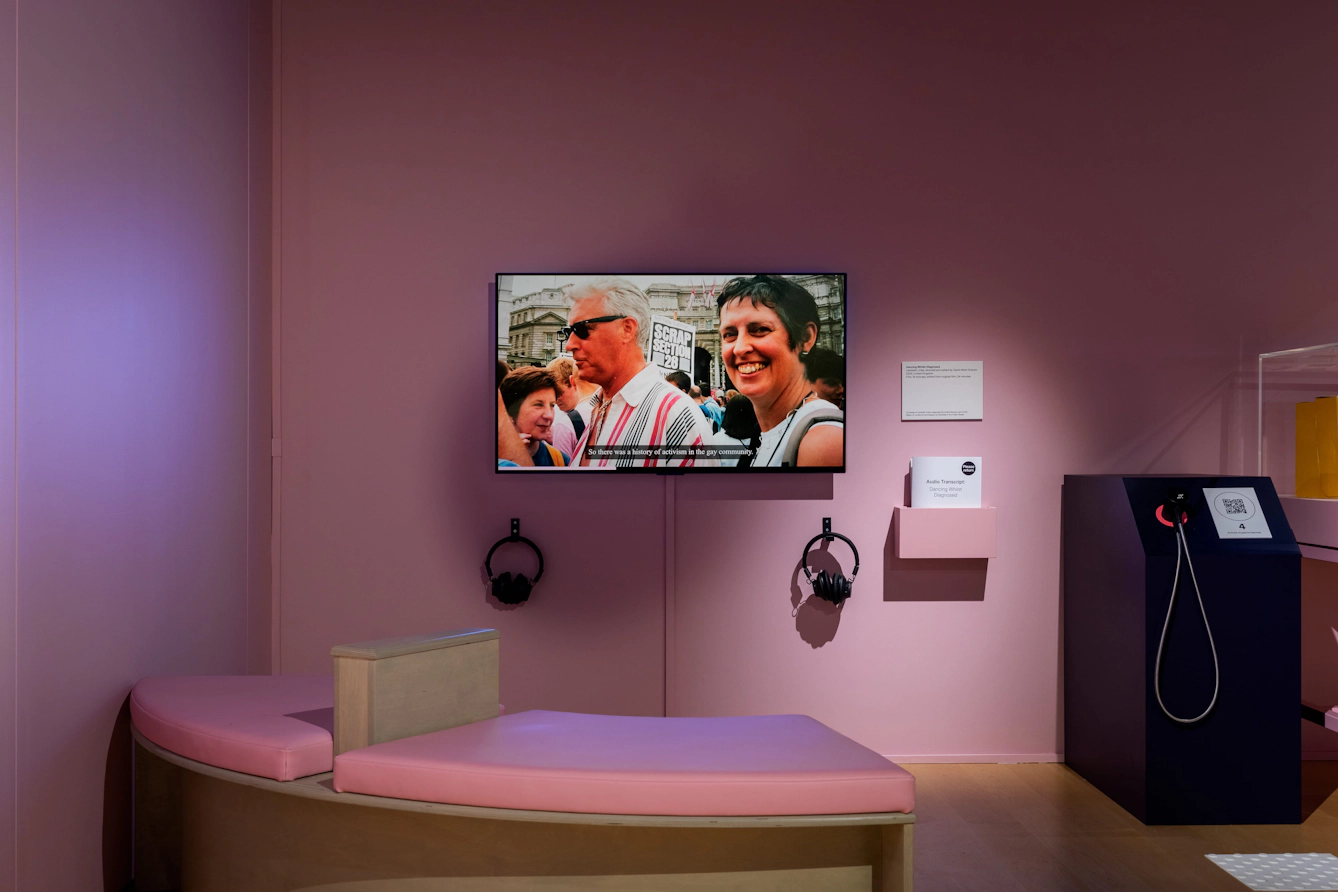
Dancing Whilst Diagnosed. Directed and edited by David Mark Graham. Courtesy of Lambeth Links, supported by Untold Stories, part of the Mayor of London's Commission on Diversity in the Public Realm. ‘Tenderness and Rage’ exhibition at Wellcome Collection. Gallery Photo: Benjamin Gilbert. © Wellcome Collection. Attribution-NonCommercial 4.0 International (CC BY-NC 4.0).
There is a film about The Landmark called ‘Dancing whilst diagnosed’. It was made by a charity called Lambeth Links and filmmaker David Mark Graham.
In the film, people who used to use and work at The Landmark talk about what it was like and why it was such an important place.
The film is around 15 minutes long.
There is sound playing on headphones.
Tenderness and Rage. Memory Store, Angelina Namiba. Courtesy of Angelina Namiba. Gallery Photo: Benjamin Gilbert. © Wellcome Collection. Attribution-NonCommercial 4.0 International (CC BY-NC 4.0).
‘Memory Store’
Angelina Namiba is an HIV activist. In 1992 Angelina found out she had HIV.
At this time there were not many useful medicines for HIV. This meant Angelina might die.
Angelina made the ‘Memory Store’ for her daughter. This was so if Angelina died, her daughter would have items to look at to help remember Angelina.
Angelina did not die and is still alive today. Angelina works as an activist and peer mentor for mothers living with HIV. A peer mentor is someone who has a life like yours and can give you advice and support.
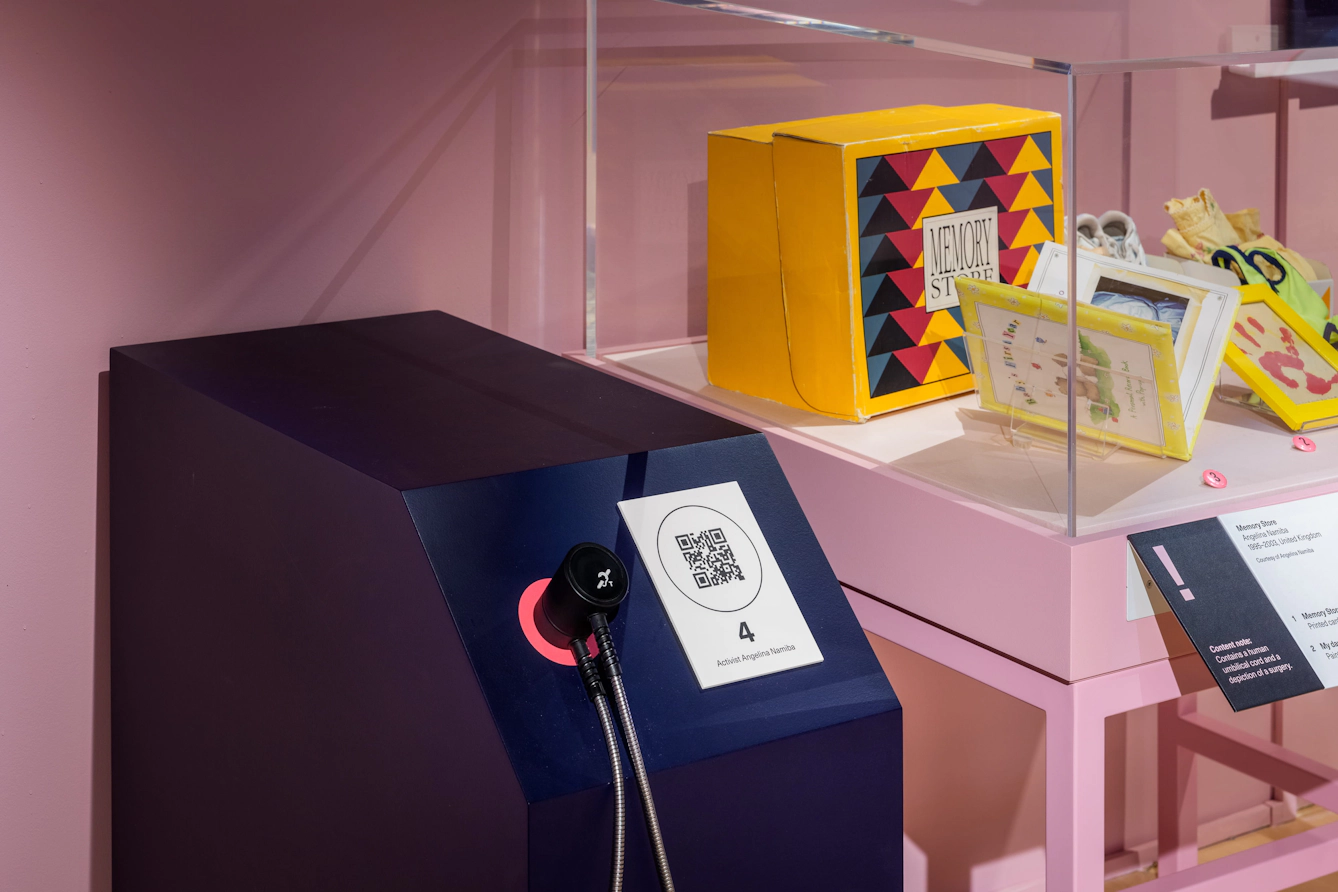
Memory Store, Angelina Namiba. Courtesy of Angelina Namiba. ‘Tenderness and Rage’ exhibition at Wellcome Collection. Gallery Photo: Benjamin Gilbert. © Wellcome Collection. Attribution-NonCommercial 4.0 International (CC BY-NC 4.0).
There is a recording of Angelina Namiba talking about why the items in the ‘Memory Store’ are important memories for her and her daughter.

You can listen to the audio on the earcone on the wall, or by scanning the QR code.
The audio is around 4 minutes long.
This object includes a picture of a surgery and a human umbilical cord.
Visitor Experience Assistants. Source: Wellcome Collection. Attribution-NonCommercial 4.0 International (CC BY-NC 4.0).
If you need help with anything, you can ask a member of staff.
What is in room 2
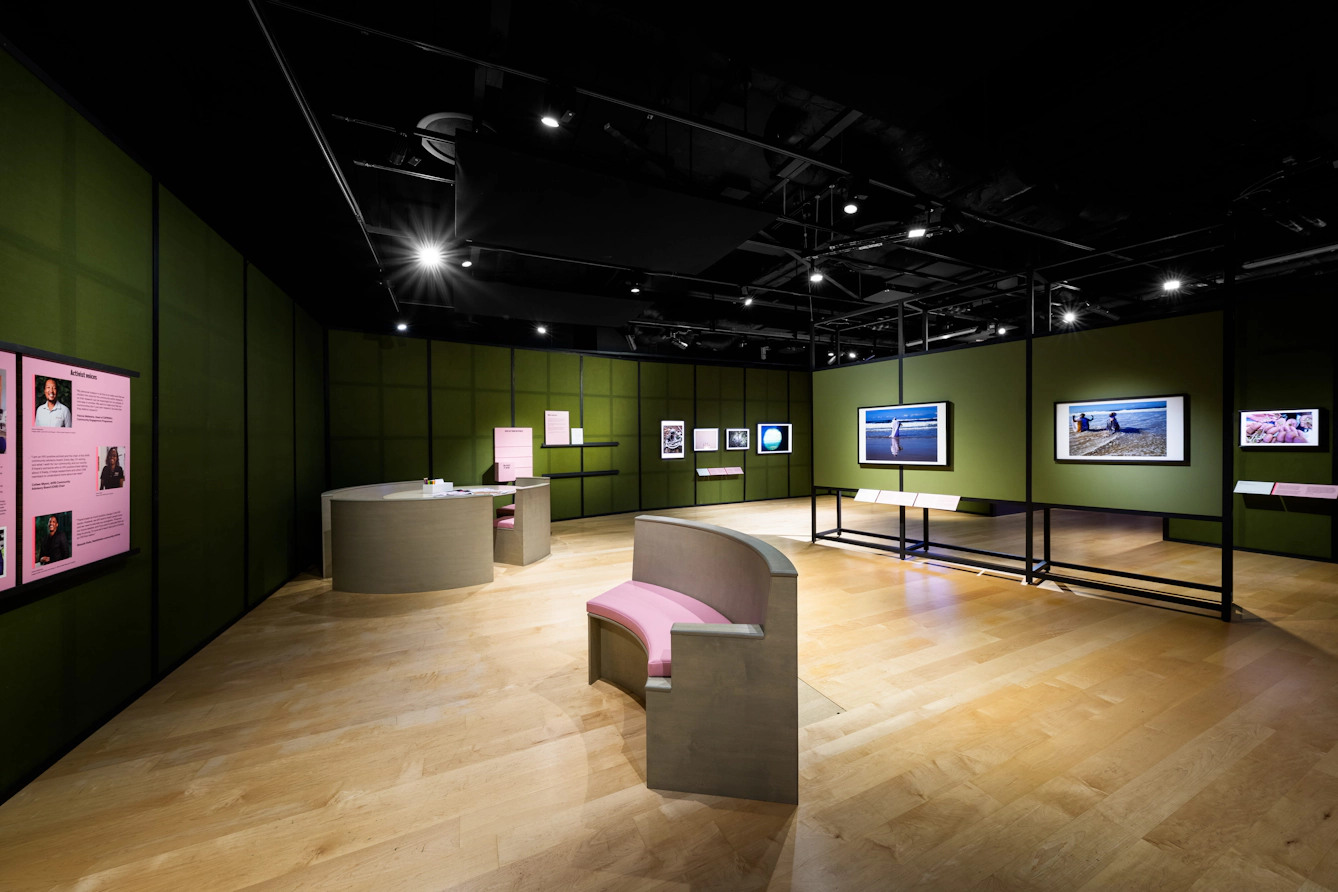
‘Tenderness and Rage’ exhibition at Wellcome Collection, Gallery Photo: Benjamin Gilbert. © Wellcome Collection. Attribution-NonCommercial 4.0 International (CC BY-NC 4.0).
In room 2 there are stories about activists living with HIV around the world today.
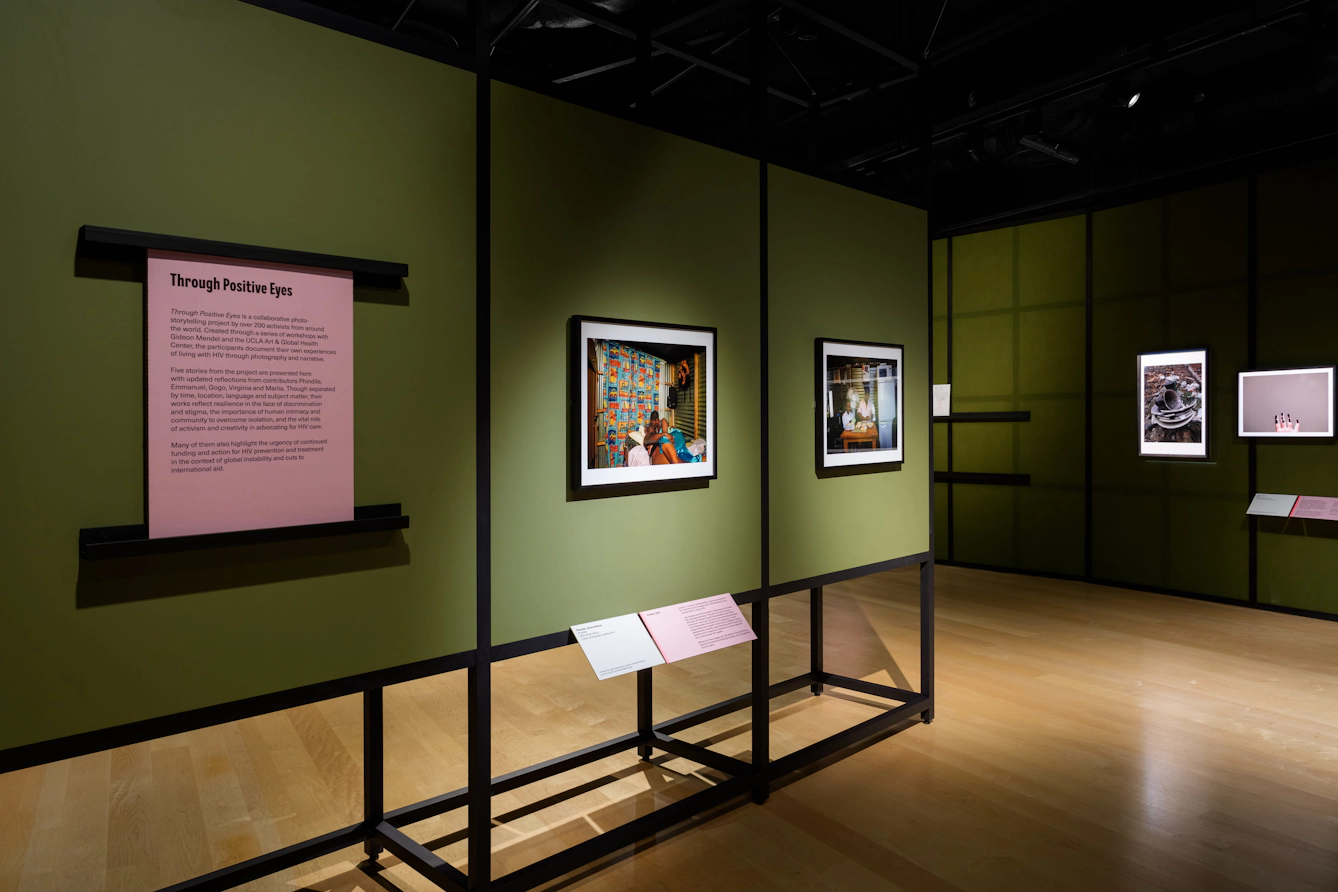
Through Positive Eyes. © Through Positive Eyes, a project of Gideon Mendel and the UCLA Art and Global Health Center. ‘Tenderness and Rage’ exhibition at Wellcome Collection. Gallery Photo: Benjamin Gilbert. © Wellcome Collection. Attribution-NonCommercial 4.0 International (CC BY-NC 4.0).
‘Through Positive Eyes’
‘Through Positive Eyes’ is a photo-storytelling project by artist Gideon Mendel and the Art & Global Health Center at UCLA.
Photo-storytelling means that people use photographs and words together to talk about their experiences.
In this project people living with HIV in different cities around the world made photographs about their experiences.
In this exhibition there are 5 stories from ‘Through Positive Eyes’. These stories all have:
- Photographs taken by the people living with HIV, showing things and moments that are important to them.
- Text labels written by these people, talking about why these images are important to them.
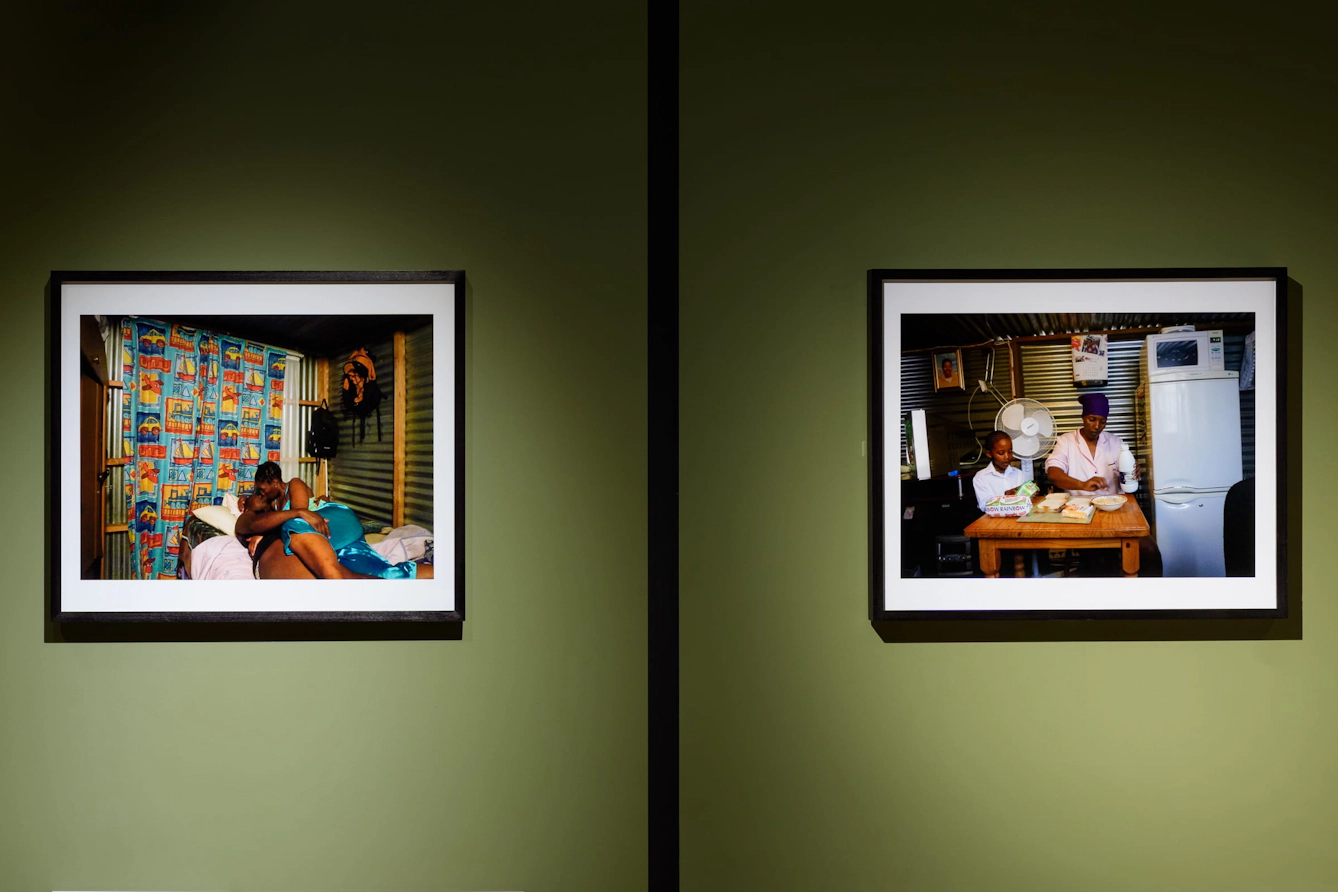
Through Positive Eyes. © Through Positive Eyes, a project of Gideon Mendel and the UCLA Art and Global Health Center. ‘Tenderness and Rage’ exhibition at Wellcome Collection. Gallery Photo: Benjamin Gilbert. © Wellcome Collection. Attribution-NonCommercial 4.0 International (CC BY-NC 4.0).
There are 2 photos by Phindile in Johannesburg, South Africa.
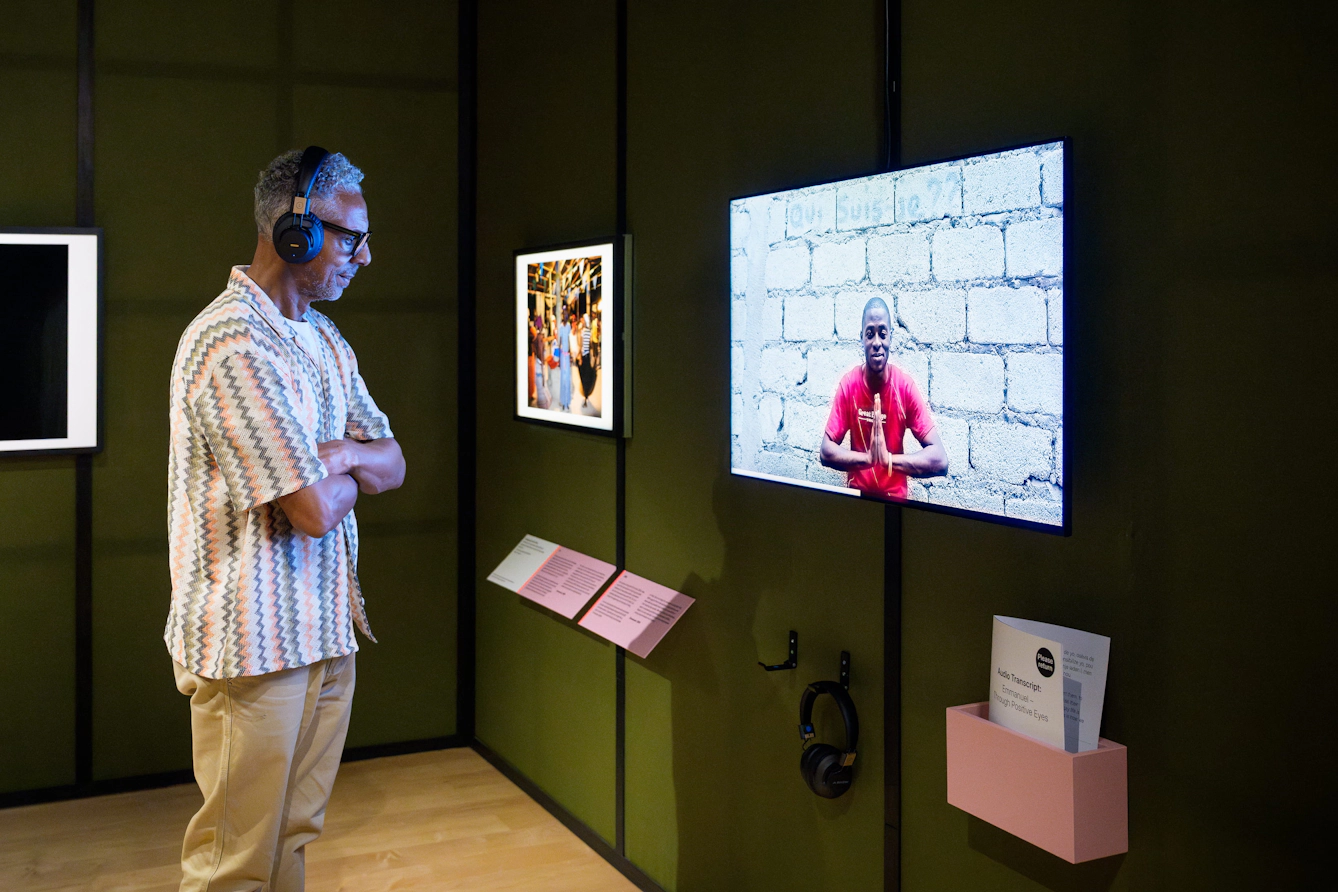
Through Positive Eyes. © Through Positive Eyes, a project of Gideon Mendel and the UCLA Art and Global Health Center. ‘Tenderness and Rage’ exhibition at Wellcome Collection. Gallery Photo: Benjamin Gilbert. © Wellcome Collection. Attribution-NonCommercial 4.0 International (CC BY-NC 4.0).
There is 1 photo by Emmanuel in Port-au-Prince, Haiti.
There is also a film about Emmanuel.
The film is 4 minutes long.
There is sound on headphones.
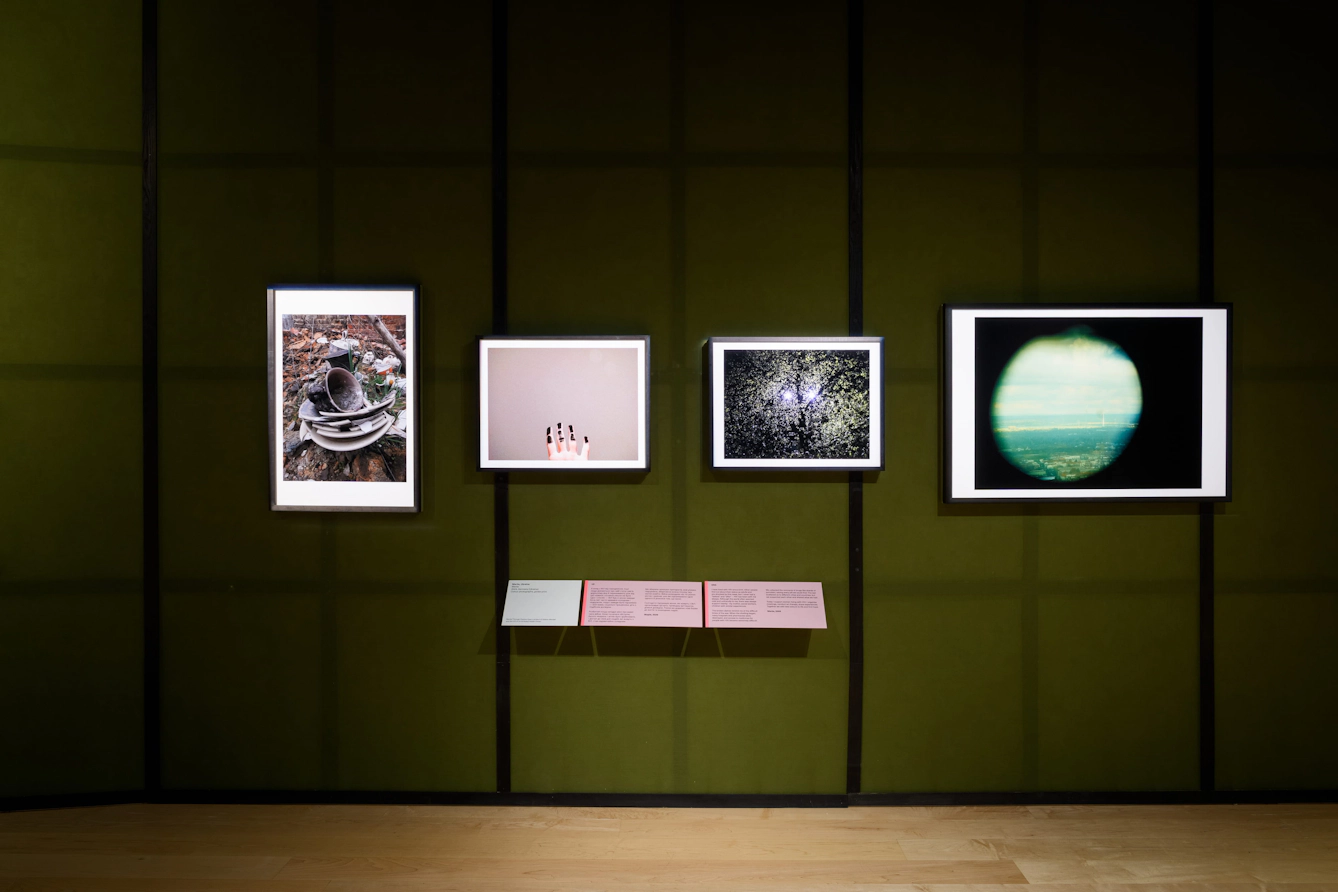
Through Positive Eyes. © Through Positive Eyes, a project of Gideon Mendel and the UCLA Art and Global Health Center. ‘Tenderness and Rage’ exhibition at Wellcome Collection. Gallery Photo: Benjamin Gilbert. © Wellcome Collection. Attribution-NonCommercial 4.0 International (CC BY-NC 4.0).
There are 4 photos by Mariia in Ukraine.
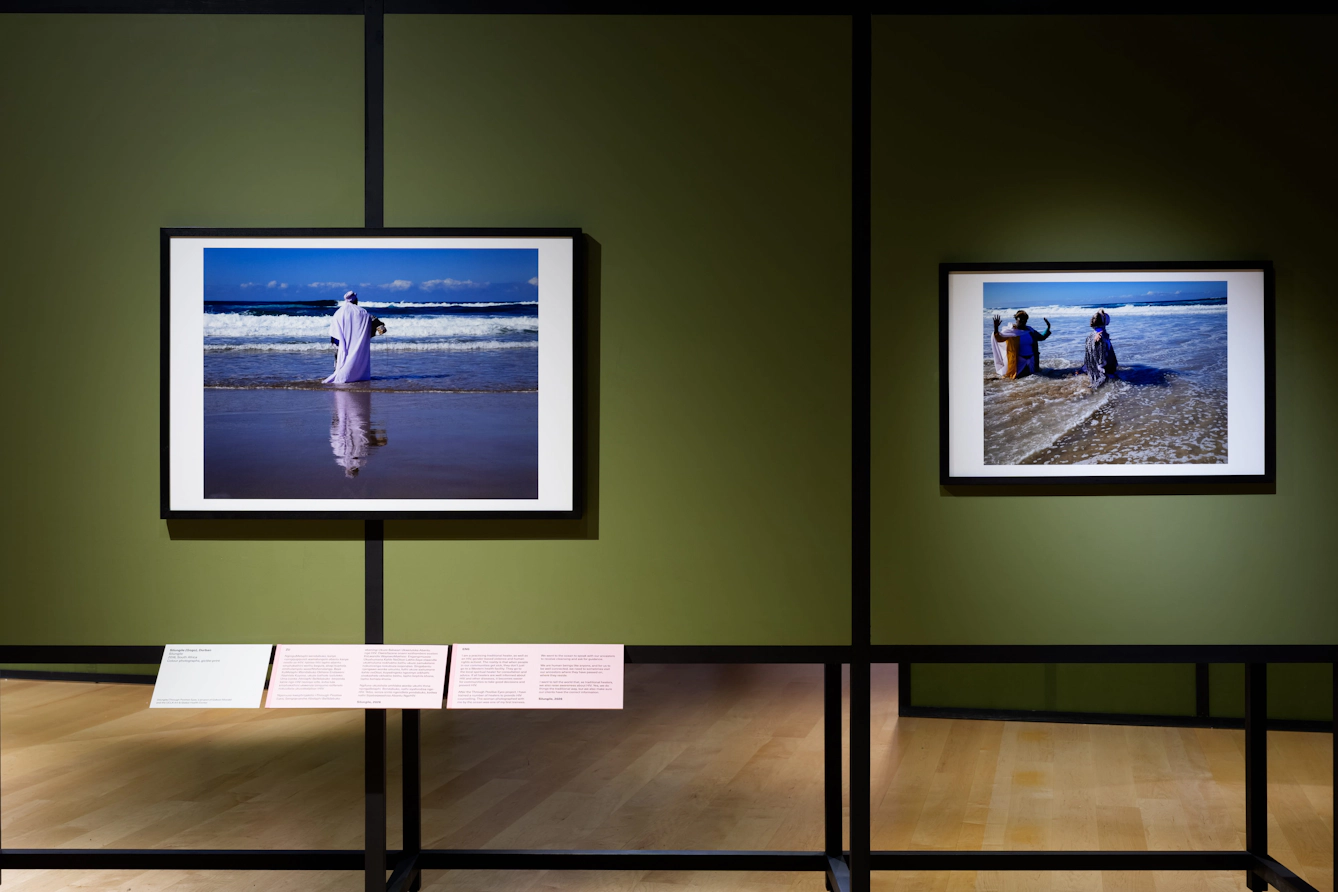
Through Positive Eyes. © Through Positive Eyes, a project of Gideon Mendel and the UCLA Art and Global Health Center. ‘Tenderness and Rage’ exhibition at Wellcome Collection. Gallery Photo: Benjamin Gilbert. © Wellcome Collection. Attribution-NonCommercial 4.0 International (CC BY-NC 4.0).
There are 2 photos by Silungile (Gogo) in Durban, South Africa.
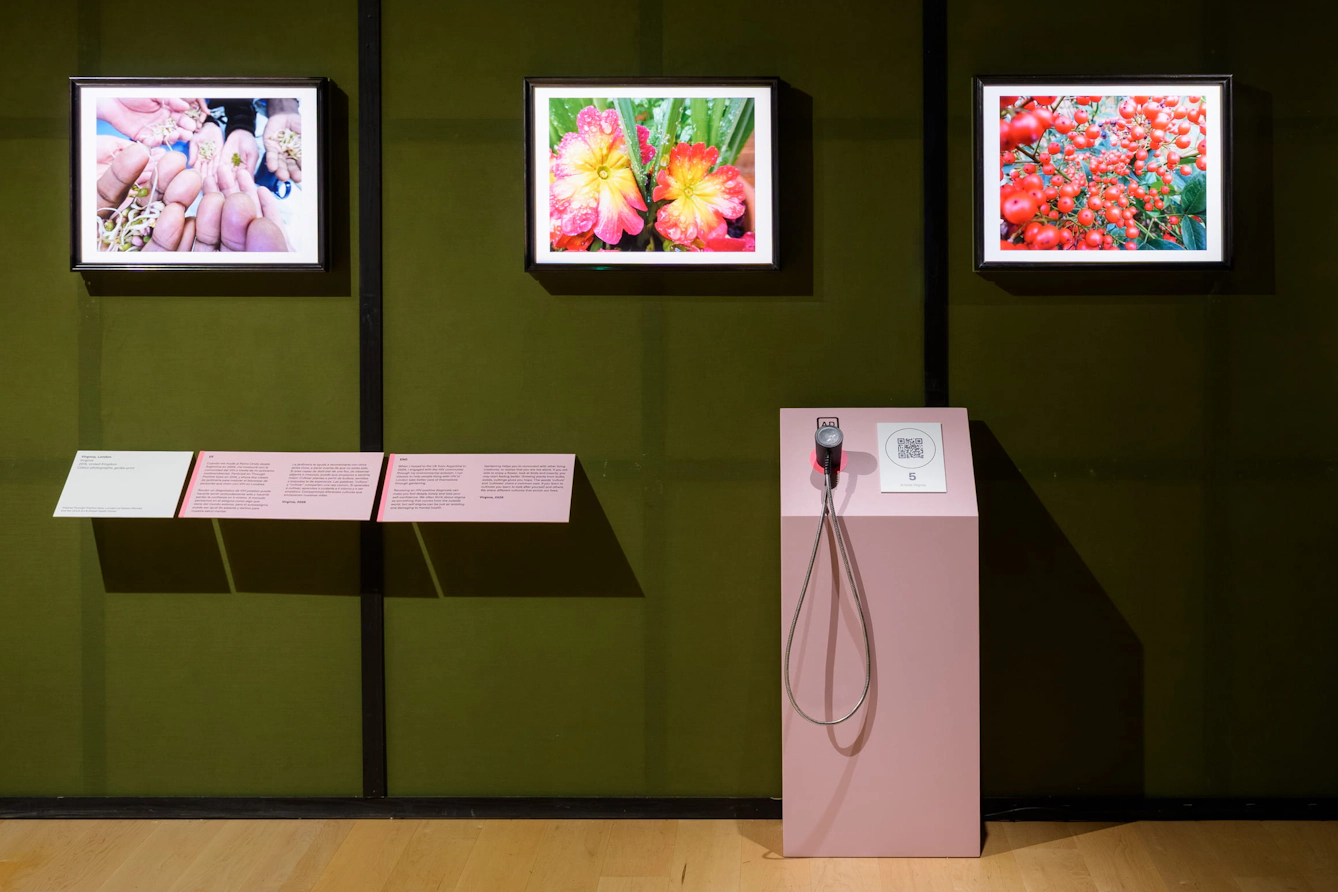
Through Positive Eyes. © Through Positive Eyes, a project of Gideon Mendel and the UCLA Art and Global Health Center. ‘Tenderness and Rage’ exhibition at Wellcome Collection. Gallery Photo: Benjamin Gilbert. © Wellcome Collection. Attribution-NonCommercial 4.0 International (CC BY-NC 4.0).
There are 3 photos by Virginia in London, United Kingdom.

There is an audio recording of Virginia talking about why these photos are important to her.
You can listen to the audio on the earcone on the wall, or by scanning the QR code.
The audio is around 4 minutes long.
Female body parts and Power Bags. Courtesy of Positively UK. ‘Tenderness and Rage’ exhibition at Wellcome Collection. Gallery Photo: Benjamin Gilbert. © Wellcome Collection. Attribution-NonCommercial 4.0 International (CC BY-NC 4.0).
Catwalk4Power
Catwalk4Power is a group of women living with HIV. Many of these women are from global majority and migrant backgrounds.
The women in Catwalk4Power work together to:
- make art and clothes
- perform and dance
- protest and help people understand HIV
- help each other.
In this section you can look at some of the artworks they have made.

Strutting to stop stigma, Mel Rattue, commissioned by Visual Aids. Courtesy of Mel Rattue. ‘Tenderness and Rage’ exhibition at Wellcome Collection. Gallery Photo: Benjamin Gilbert. © Wellcome Collection. Attribution-NonCommercial 4.0 International (CC BY-NC 4.0).
There is a comic called ‘Strutting to Stop Stigma’ by Mel Rattue about Catwalk4Power.
You can pick up and read the comic. Please put the comic back when you finish reading.
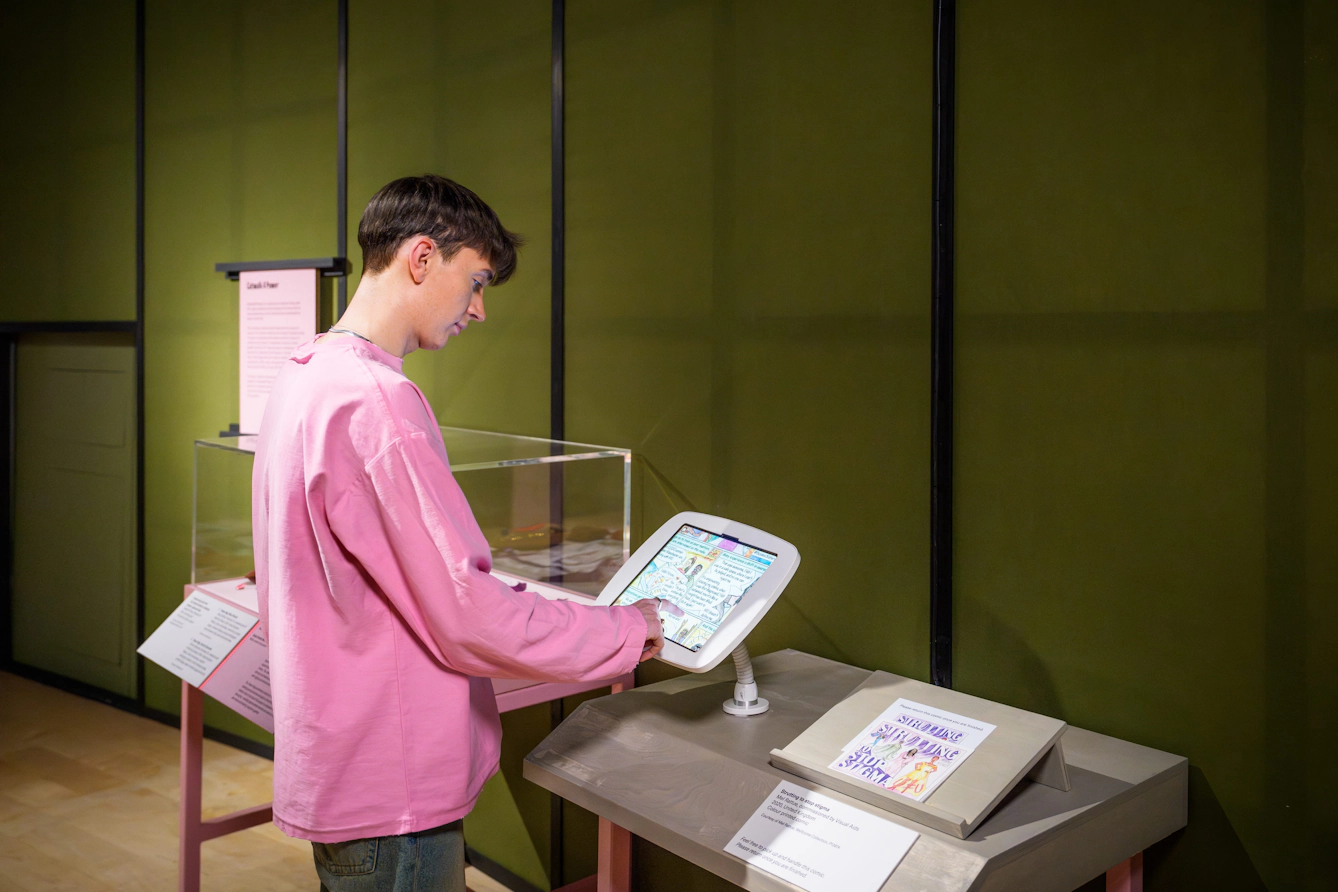
Strutting to stop stigma, Mel Rattue, commissioned by Visual Aids. Courtesy of Mel Rattue. ‘Tenderness and Rage’ exhibition at Wellcome Collection. Gallery Photo: Benjamin Gilbert. © Wellcome Collection. Attribution-NonCommercial 4.0 International (CC BY-NC 4.0).
There is also an iPad with the comic. You can use the iPad to make the comic bigger.
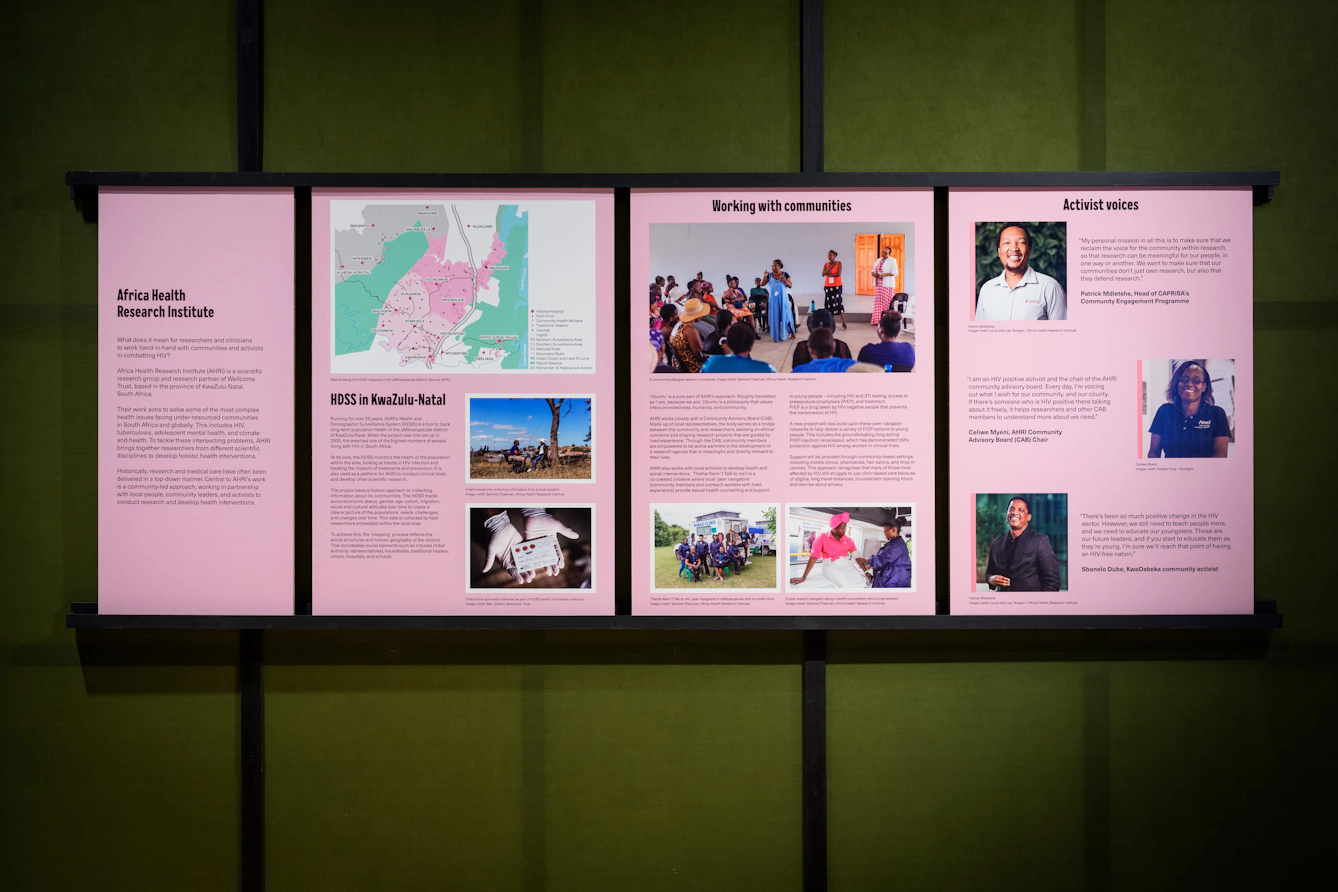
Africa Health Research Institute. ‘Tenderness and Rage’ exhibition at Wellcome Collection. Gallery Photo: Benjamin Gilbert. © Wellcome Collection. Attribution-NonCommercial 4.0 International (CC BY-NC 4.0).
Africa Health Research Institute
The Africa Health Research Institute is a research centre in the KwaZulu Natal region in South Africa.
We call it the AHRI for short.
The AHRI is a place where scientists and researchers work together to:
- Better understand illnesses like HIV.
- Try to find treatments and medicines that will help people.
- Study how people’s health changes over time.
In this display, there is text and images that talk about why AHRI’s work is important.
The display also talks about how AHRI works together with local people and activists to do research.
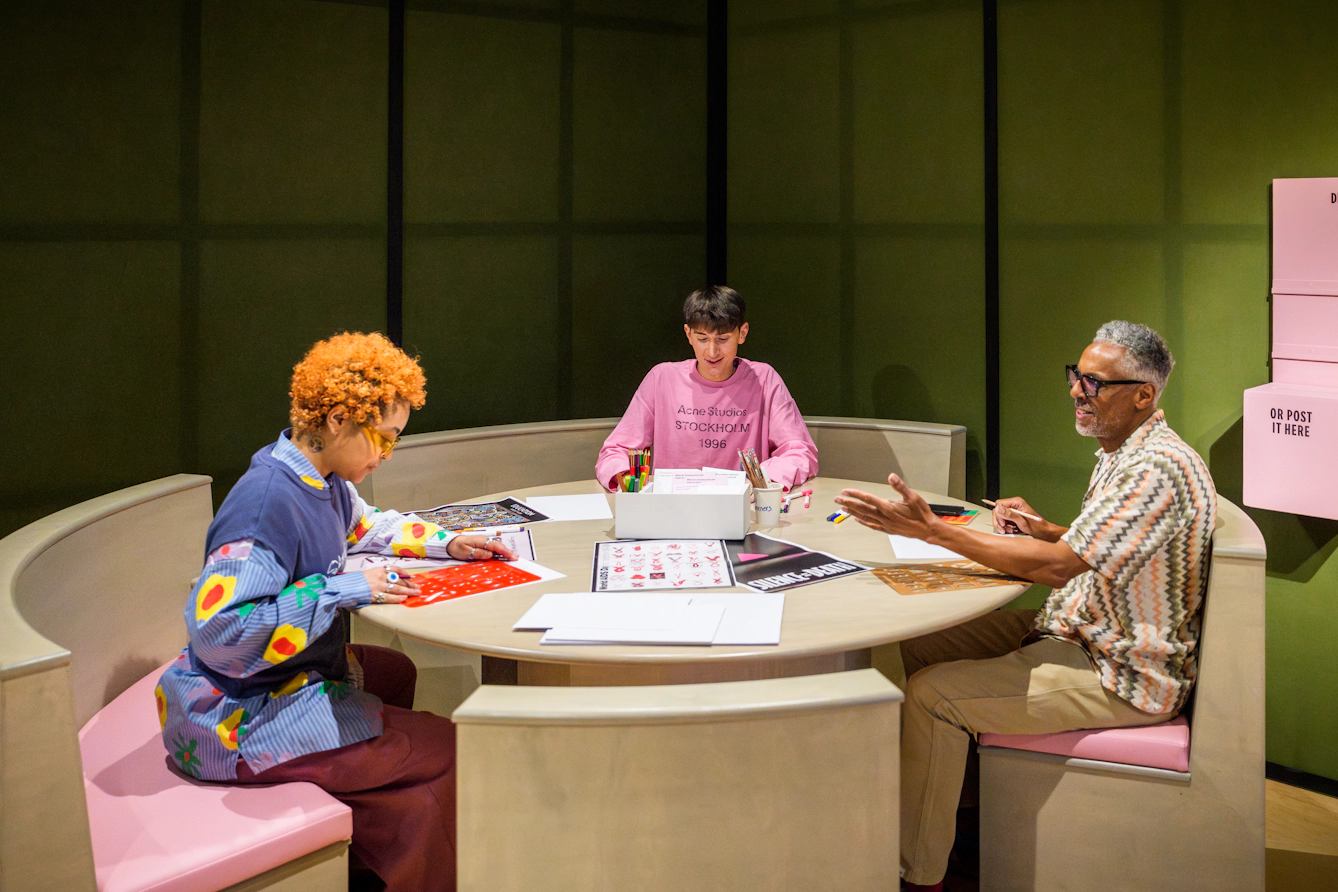
Tenderness and Rage. Placard making activity. Gallery Photo: Benjamin Gilbert. © Wellcome Collection. Attribution-NonCommercial 4.0 International (CC BY-NC 4.0).
Engagement space
In room 2 there is an engagement area with a table and chairs you can sit at.
In this area there are:
- comment cards with questions you can respond to
- placard templates you can write or draw on
- paper badge templates you can write or draw on
- stencils
- pencils
- information about groups that give support to people with HIV. If you have HIV, these groups can give you support.
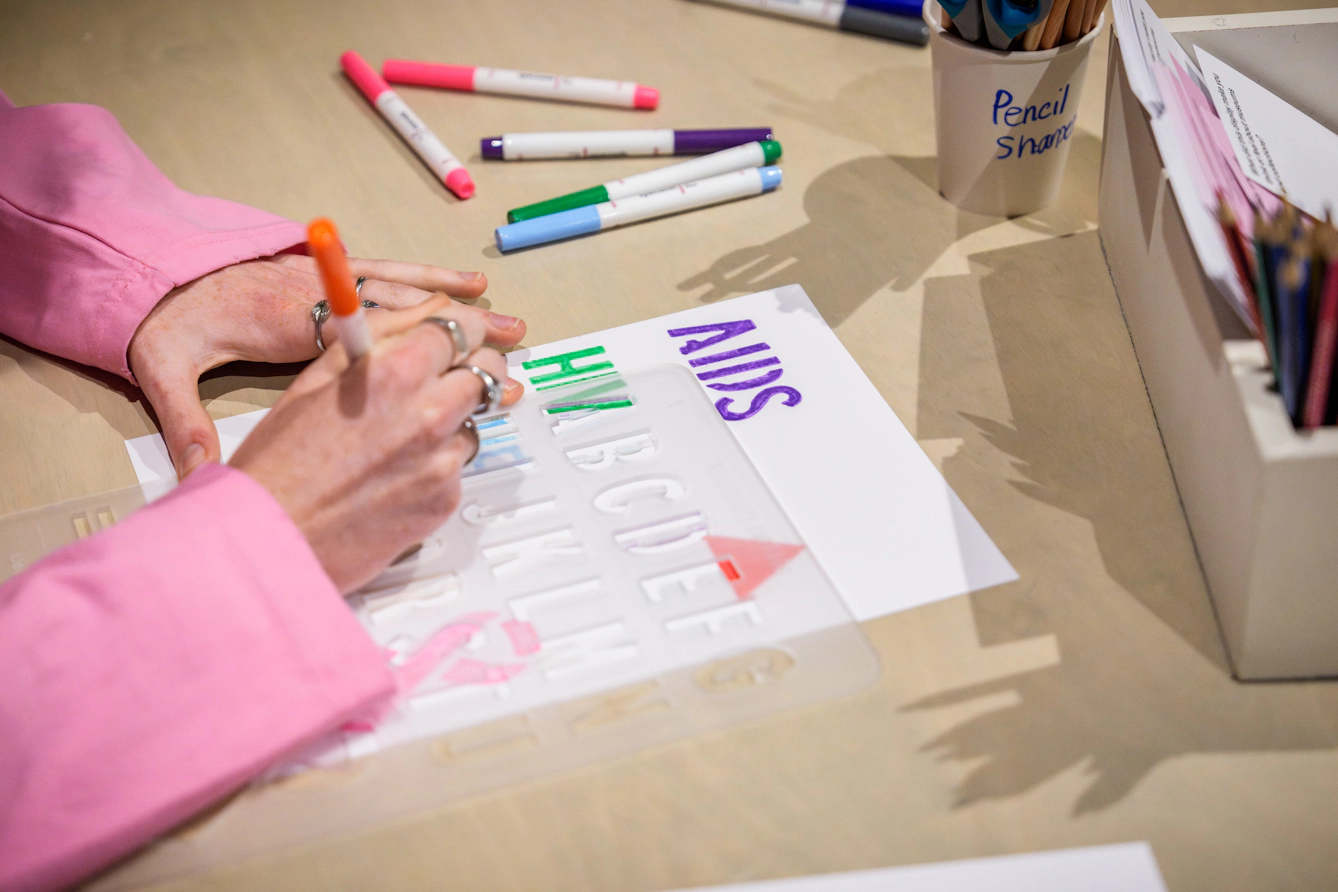
Placard making activity. ‘Tenderness and Rage’ exhibition at Wellcome Collection. Gallery Photo: Benjamin Gilbert. © Wellcome Collection. Attribution-NonCommercial 4.0 International (CC BY-NC 4.0).
Make a placard
A placard is a sign with writing or pictures on.
Placards are often used by protesters and activists to show people what they think and what they want to happen.
There is a template to help you make your own placard. You can find the template on the table with stencils and pencils to get you started.
You can write or draw your thoughts about:
- a positive message around HIV
- something you would like to see change in the world
- what we need to make a healthier future for everyone.
Or anything else you would like to make.
Visitor Experience Assistants. © Wellcome Collection. Attribution-NonCommercial 4.0 International (CC BY-NC 4.0).
You can ask a member of staff for:
- pens
- scissors
- glue
- magazine cuttings.
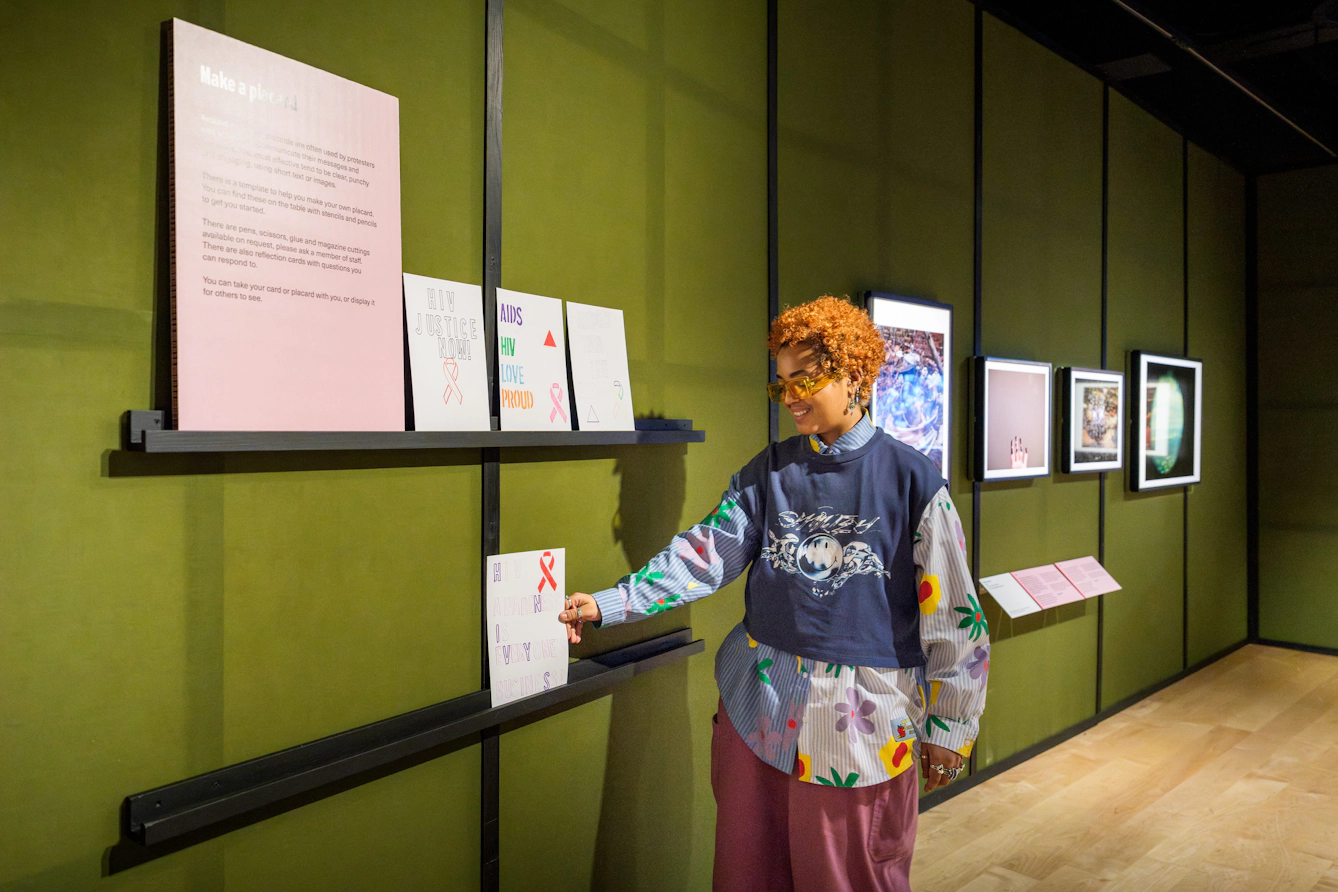
Placard making activity. ‘Tenderness and Rage’ exhibition at Wellcome Collection. Gallery Photo: Benjamin Gilbert. © Wellcome Collection. Attribution-NonCommercial 4.0 International (CC BY-NC 4.0).
You can take your placard or comment card home or leave it here for others to read.
You can look at what other people have written or drawn.
Accessibility in the exhibition
Accessibility means making sure everyone can take part.
For this exhibition, we have:
- audio description
- British Sign Language (BSL)
- tactile floor markings
- a large-print guide
- a sensory map
- a visual story.
Below you can find out more about where to find all these things, and how to use them.
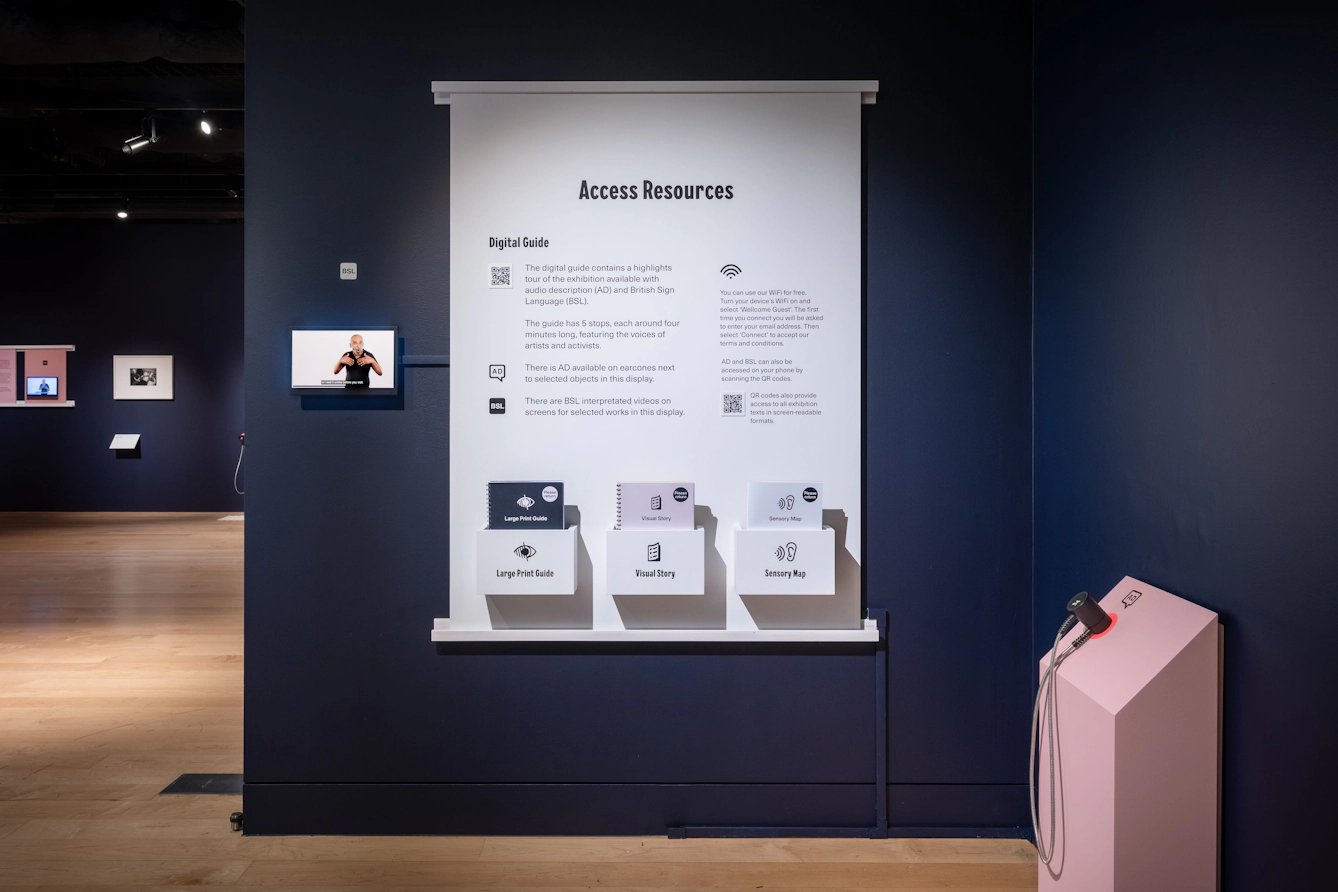
‘Tenderness and Rage’ exhibition at Wellcome Collection, Gallery Photo: Benjamin Gilbert. © Wellcome Collection. Attribution-NonCommercial 4.0 International (CC BY-NC 4.0).
Outside the exhibition you will see this text panel.
It has information about accessibility for this exhibition.
Here you can also pick up:
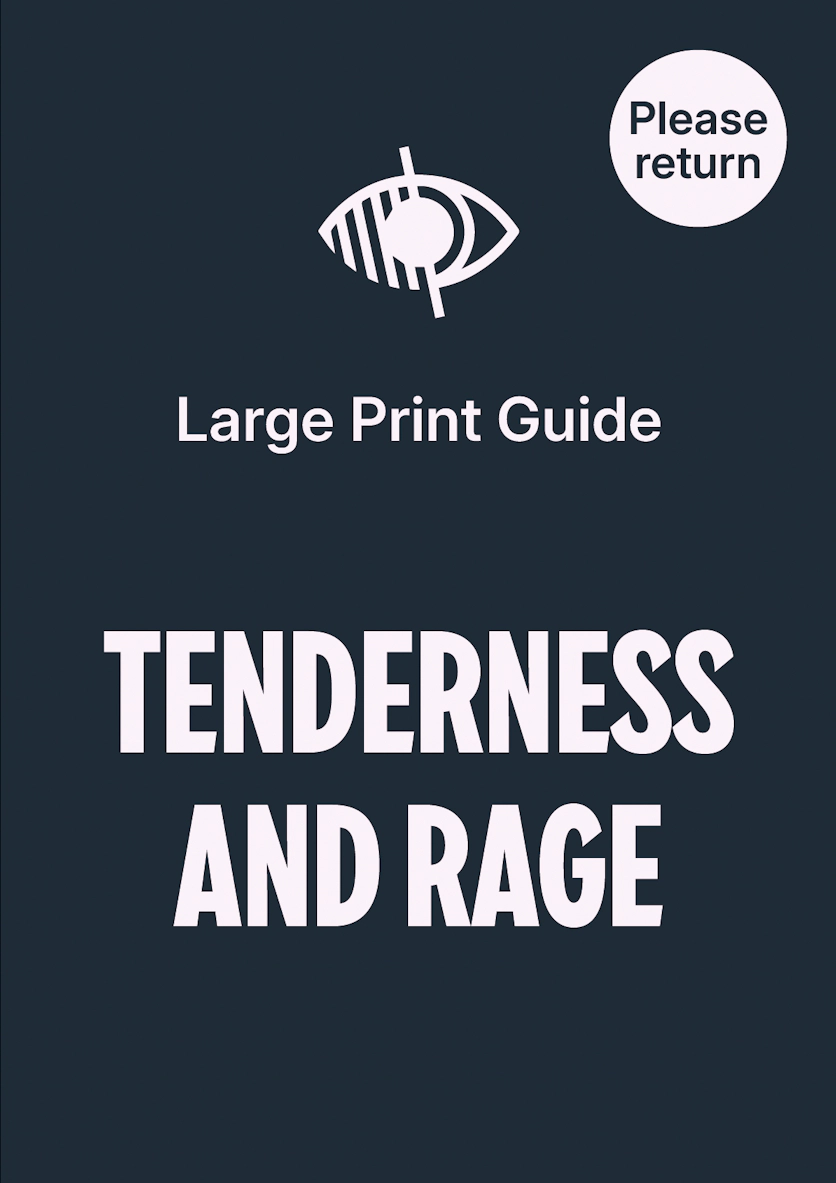
- a large-print guide
- a visual story
- a sensory map. A sensory map shows where there is loud sound, bright lights and seating.

You can get all the same information that is on the exhibition labels and panels by scanning the QR code with your phone. The information can be read by a screen reader.
To scan a QR code:
- open the camera on your phone
- point it at the QR code
- click on the link that appears.
If you do not know how to scan a QR code, we can help you.

Digital guides
There are 2 digital guides that you can use:
- an audio-described guide to hear what artworks in the exhibition look like
- a BSL guide of videos for people who use BSL.
The digital guides are on our website.
There are 5 stops in the digital guides.
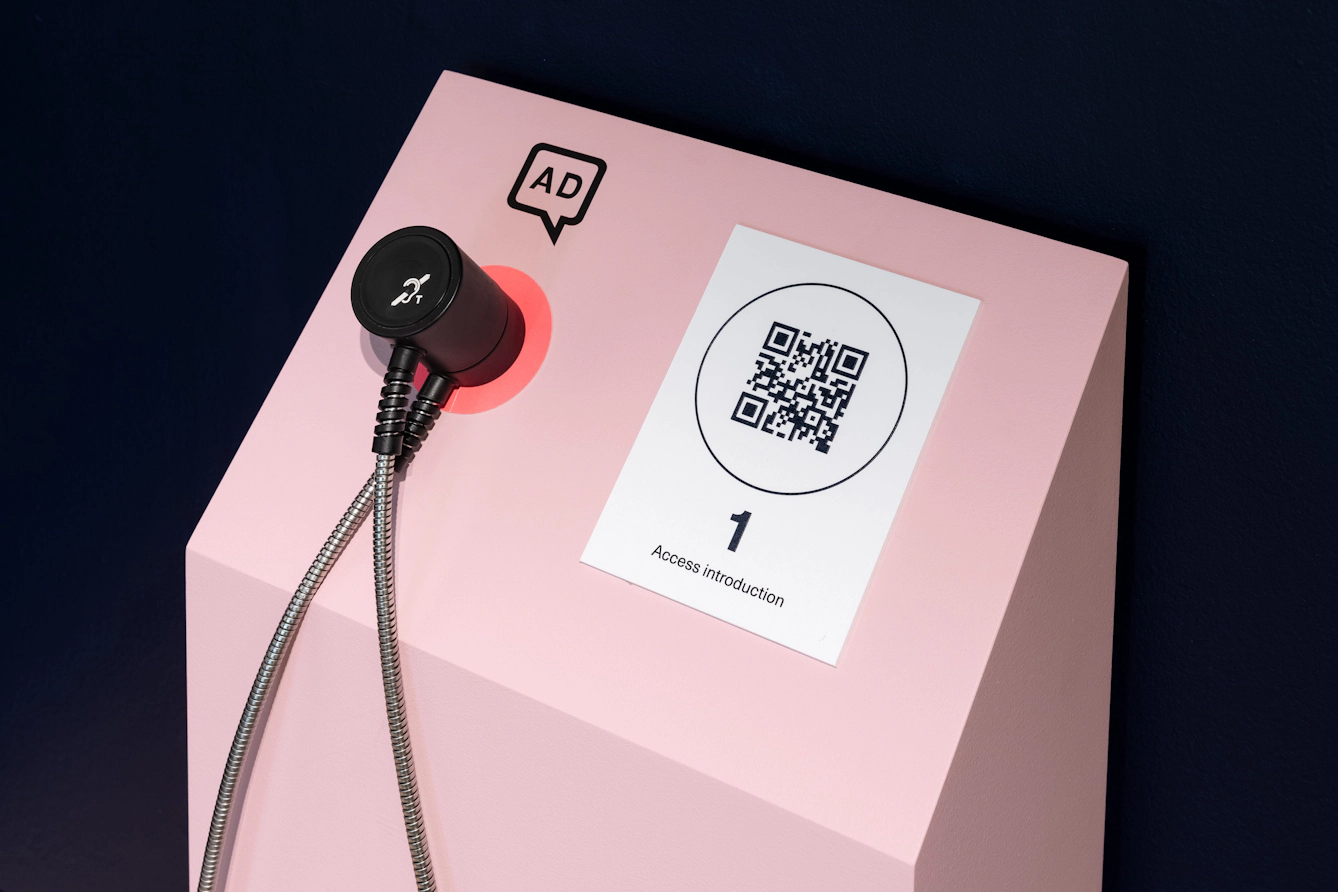
There is a number and a QR code next to each stop in the exhibition. You can scan the QR codes with your phone to get the digital guides.
‘Tenderness and Rage’ exhibition at Wellcome Collection, Gallery Photo: Benjamin Gilbert. © Wellcome Collection. Attribution-NonCommercial 4.0 International (CC BY-NC 4.0).
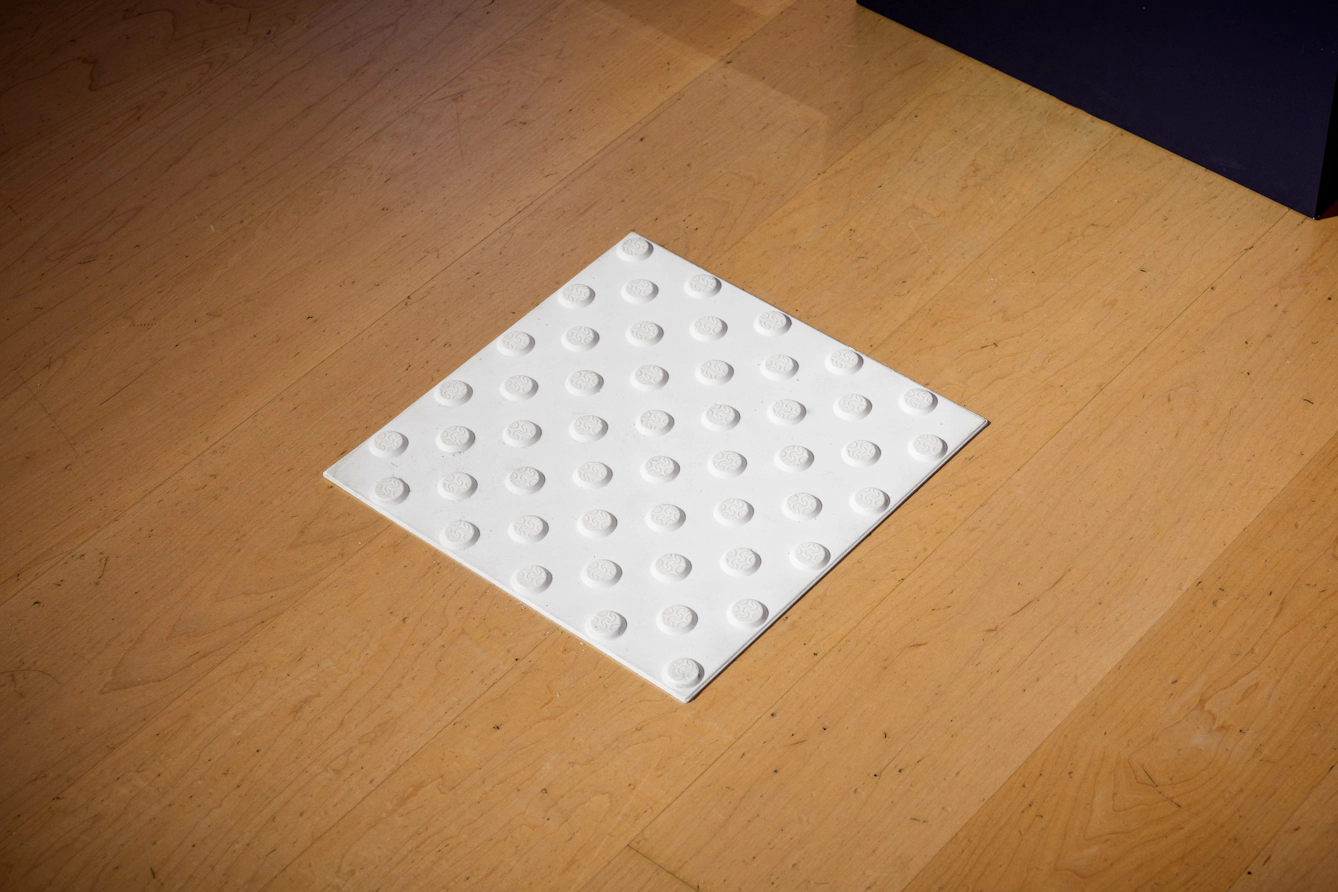
Each stop is marked with a white, tactile floor tile.
‘Tenderness and Rage’ exhibition at Wellcome Collection, Gallery Photo: Benjamin Gilbert. © Wellcome Collection. Attribution-NonCommercial 4.0 International (CC BY-NC 4.0).
You can also listen to the audio-described guides on earcones next to the objects.
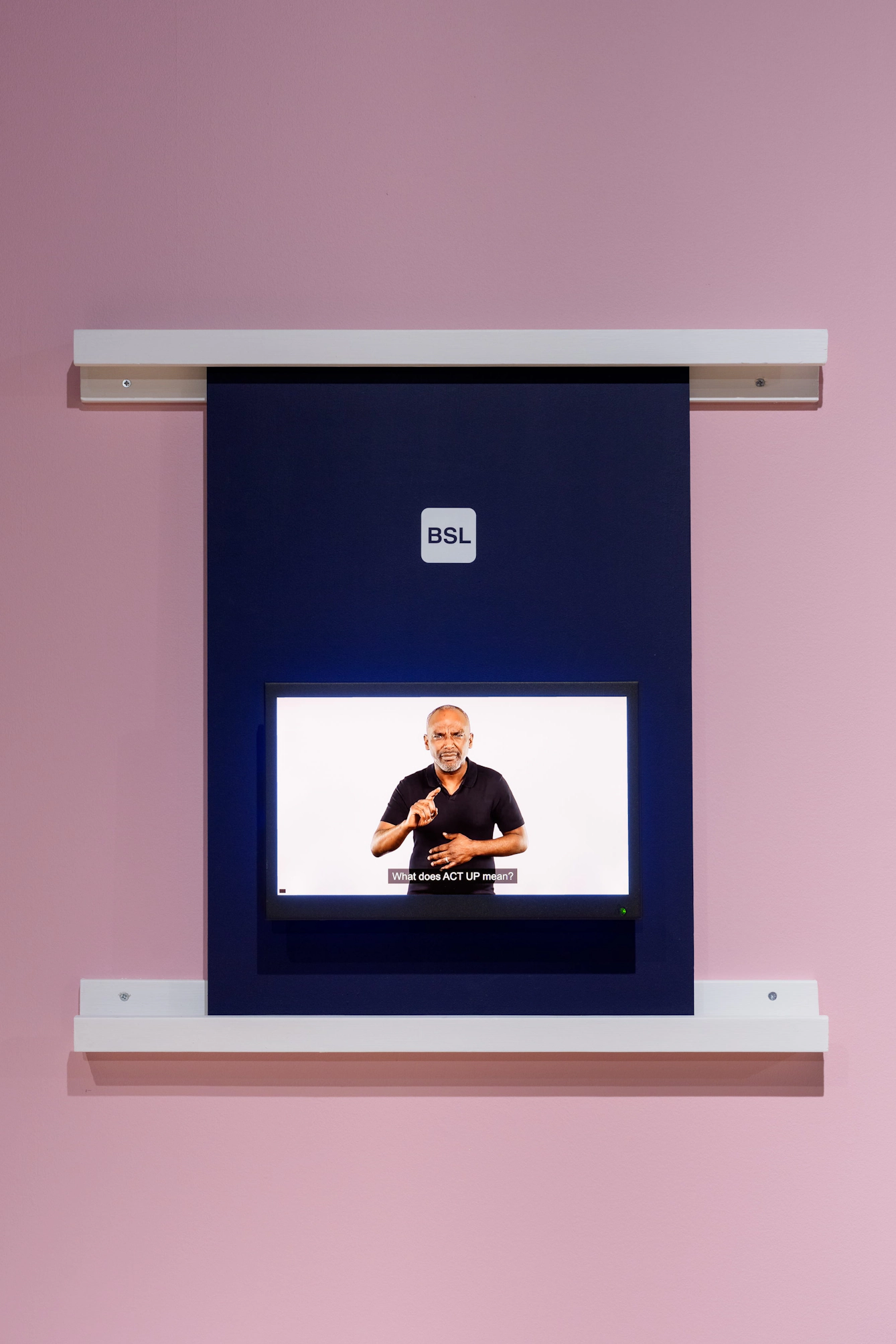
‘Tenderness and Rage’ exhibition at Wellcome Collection, Gallery Photo: Benjamin Gilbert. © Wellcome Collection. Attribution-NonCommercial 4.0 International (CC BY-NC 4.0).
There is BSL on screens next to the objects.
You can also book an audio-described tour.
On this tour a member of our team will explain what the things in the exhibition look like.
You can look on the website or board outside the exhibition for dates.
If you want an audio-described tour for your visit today, please tell a member of our gallery team.
Films and audio works in this display have:
- BSL videos
- written transcripts of the words from the clips.

You can use our WiFi for free. To do this you need to:
1) turn your phone’s WiFi on
2) choose Wellcome WiFi
3) tick a box to accept our terms and conditions
4) choose ‘connect’.
Visitor Experience Assistants. Source: Wellcome Collection. Attribution-NonCommercial 4.0 International (CC BY-NC 4.0).
If you need help with anything, you can ask a member of our gallery team.